
These days I manage a coffee grounds collection project to make compost and skin exfoliant while diverting them from landfill. I also grow a lot of food at our home garden, propagate and save seeds, promote ecosystems for biodiversity below and above ground and conduct workshops related to soil health, nutrition, composting, regeneration and conservation. I am also passionate about observing nature, apply nature based solutions and the connection between nature´s health and human health. I am a dedicated ambassador and learner about soil health, nature conservation and regeneration, agroecology, nutrition and animal rights.
These days I manage a coffee grounds collection project to make compost and skin exfoliant while diverting them from landfill. I also grow a lot of food at our home garden, propagate and save seeds, promote ecosystems for biodiversity below and above ground and conduct workshops related to soil heal…
Integrating Soil Literacy in Extracurricular Activities
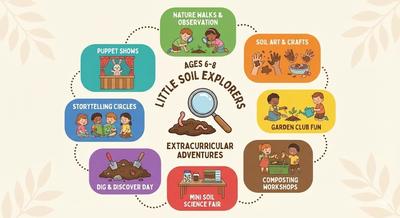
Soil literacy doesn’t end when the school bell rings—it’s a living lesson that thrives in everyday life. Section 5 invites you to step outside the formal curriculum and explore small-but-mighty ways to deepen learning. Partner with your cafeteria to compost scraps in reused containers or organise a “soil art gallery” using student creations displayed in the library. These activities don’t require extra funding or perfect conditions—just a willingness to see soil as a starting point for play, observation, and quiet moments of connection. Whether your school has a sprawling garden or a single potted plant, you’ll find ideas here to meet your students where they are, nurturing curiosity without adding to your already-full plate. Extracurricular activities can offer students additional opportunities to explore and connect with nature outside of the standard curriculum. The following list of options might inspire you on how to integrate soil literacy in extracurricular activities with your students. Choose one you like from the list and reflect on how you would implement it. For ages 6-8: Nature walks: Organize guided nature walks focusing on observing soil, plants, and animals. Equip children with magnifying glasses to explore the ground closely. Soil art projects: Lead a session where kids create paintings or crafts using natural soil pigments or items found in soil like leaves and twigs. Garden club: Start a school garden club where kids plant seeds, care for plants, and learn about the role of soil in plant growth. Include simple soil care tasks like watering and weeding. Composting workshops: Organize workshops where children can learn about composting using kitchen scraps to create nutrient-rich soil. Mini soil science fair: Host a mini science fair where each child presents a small project related to soil, such as growing beans in jars or creating soil layer models. Dig and discover day: Plan a special day for digging in designated soil patches, searching for worms, rocks, and discovering what’s beneath the surface. Storytelling circles: Arrange storytelling circles where children share stories or listen to tales about the importance of soil and nature. Soil and nature crafts: Create potpourri bags using dried soil ingredients like herbs and flowers, discussing the role of soil in growing these plants. Puppet shows: Organize puppet shows featuring characters like “Peter Rabbit” to teach children about soil health in a fun way. Simple soil science club: Form a club where children perform simple experiments like sprouting seeds in different types of soil or examining soil with a magnifying glass. STORY: The Magic Soil of Green Valley Once upon a time, in the lush and lively land of Green Valley, there lived a curious little fairy named Flora. Flora loved to sprinkle her magic all around the valley, helping flowers bloom and trees grow tall. Her favorite part of nature was the soil, which she called "the magic carpet of the earth." One sunny morning, as Flora flitted about playing with the dew drops, she noticed something unusual. The flowers seemed droopy, and the vegetable patches were not as green as they used to be. Flora's heart sank. What could be wrong? Determined to find out, Flora fluttered her delicate wings and zoomed towards Elder Elm, the oldest and wisest tree in Green Valley. "Elder Elm," Flora chirped, "Why are the plants unhappy today?" Elder Elm rustled his leaves and replied in a deep, gentle voice, "Dear Flora, the soil beneath us needs care and love. It is worn out and tired, yearning for nourishment to work its magic again." Flora pondered over Elder Elm's words and decided to call a meeting with her fairy friends. Together, they crafted a plan to heal the tired soil. The fairies danced and spun, gathering fallen leaves, twigs, and bits of fruit from the forest. They formed a magical compost heap in the corner of the valley. As they worked, Flora spread kindness and gratitude over the soil, whispering secrets of renewal and hope. She used her sparkling wand to sprinkle tiny drops of rain mixed with fairy dust, gently kneading it into the earth. Days passed, and the soil began to feel stronger and richer. Green shoots started peeking through the surface, the flowers lifted their cheerful heads, and the trees swayed joyfully with the breeze. The valley buzzed with life and laughter once more. In gratitude, the soil gifted Flora and her friends with the most beautiful garden Green Valley had ever seen. It bloomed with the brightest colors, filling the air with a sweet, fragrant aroma. From that day on, Flora and her fairy friends became the keepers of the soil, visiting it every now and then to offer their tender care. And the soil, in return, promised to keep Green Valley flourishing forever. So, whenever you walk in nature, remember Flora's tale and treat the soil with care, for it holds the magic to grow the world around us strong and fair. Get inspired by The Magical world of soil biodiversity - A collection of 10 children’s stories from around the world For ages 9-14: Soil testing workshops: Conduct workshops where students test soil samples for pH, moisture, and nutrient levels using simple kits. Advanced gardening projects: Organize projects where students create and manage small-scale gardens, experimenting with different soil treatments and plant types. Environmental club: Develop an environmental club focusing on soil conservation, leading initiatives such as tree planting and soil restoration projects. Field trips to farms or botanical gardens: Plan educational trips to local farms, botanical gardens, or nature reserves to learn about soil use and management directly from experts. Soil erosion workshops: Arrange workshops or projects on soil erosion and its impact, encouraging students to come up with practical solutions to prevent erosion. Soil and water filtration projects: Guide students in projects that demonstrate how soil helps in water filtration. This could include building simple filter models using different soil types. Soil conservation campaigns: Engage students in campaigns to educate the community about soil conservation, creating posters, and informational brochures. Soil science competitions: Host competitions where students present research on local soil types, their uses, and conservation methods. Encourage innovative presentation formats like digital storytelling. Exploration of ancient soils: Encourage projects exploring how historical sites and ancient civilizations interacted with the soil, leading to discussions on sustainability. Integrated science projects: Coordinate projects integrating soil studies with other sciences such as chemistry (soil nutrients), biology (microorganisms), and geography (landforms). Forum reflection How can you connect soil to one subject you teach this week? What’s one small step to try (e.g., a soil texture activity in math, a soil story in reading)? What might get in the way? How could you solve it (e.g., use recycled jars instead of lab tools)? You don’t need a big plan, start small. Enter the Forum This Soil Games page or this one may give you inspirations for creative ways of play and learn about soil. Soil isn’t just a topic, it’s a lens. Through this module, you’ve explored how to turn soil literacy into a bridge between your classroom and the community. You’ve identified your goals, mapped allies, designed projects, and discovered how soil can weave through every subject and beyond. Remember: You don’t need a perfect plan or a green thumb to start. A single pot of soil, a five-minute chat about earthworms, or a student’s question about “why dirt matters” can ignite a journey. As you move forward, return to this Module when in doubt or schedules overwhelm. Your work isn’t just about teaching soil; it’s about nurturing a generation that sees the ground beneath them as alive, connected, and worth caring for.
Integrating Soil Literacy in Primary school subjects
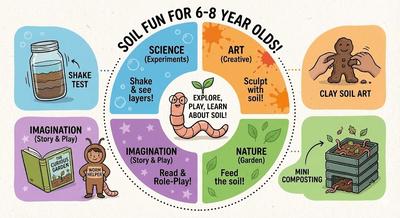
In this module, discover how to embed soil themes into everyday lessons. Use soil moisture measurements to teach math skills, analyse folk tales about farming in literacy circles, or explore how soil colors inspire local art traditions. These connections save planning time while making abstract concepts tangible for young learners. The following list of options might inspire you on how to integrate soil literacy in the subjects you teach. Choose one you like from the list and reflect on how you would implement it in your class. Before getting into some experiements, check this 'what is dirt' video that can get kids inspired to learn and practice more. AGE GROUP: 6–8 year olds Simple soil experiments: Activity: Perform a "shake test" to observe soil layers. Have children fill a jar with soil, water, and dish soap, then shake it and let it settle to see the different layers form. Discuss what they observe. Soil sensory play: Activity: Create a sensory bin with different types of soil (e.g., sandy, clay, loamy) and let students feel the textures. Encourage them to describe the textures and discuss which soil feels best for planting seeds. Story time with soil: Activity: Read children’s books that focus on plants and soil, such as "The Curious Garden" by Peter Brown. After reading, discuss the role of soil in helping gardens grow. Ecosystem dioramas: Activity: Build simple dioramas showing different ecosystems and the role of soil in each. Use small toys, plants, and natural materials to illustrate how soil supports life. Garden detectives: Activity: Organize a garden scavenger hunt where students look for items like different soil colors, worms, rocks, and small plants. Use this to discuss how each item relates to soil. Mini composting projects: Activity: Create a small classroom compost bin with leaves, fruit peels, and soil. Let children observe the decomposition process and learn how organic matter enriches soil. Clay soil art: Activity: Let students use natural clay (from soil) to mold and create simple sculptures. Discuss how clay is a type of soil with different properties than sandy or loamy soil. Plant growth charts: Activity: Plant seeds in cups of different soil types. Have students predict and chart which soil type will help the seed grow best, and observe over several weeks. Role play – soil helpers: Activity: Assign roles like "soil scientist," "worm helper," or "plant protector" and do a role-play activity where children act out how they help soil in a garden ecosystem. Interactive soil songs and games: Activity: Teach a simple song about soil with movements, or create a game where students can "dig" for imaginary soil treasures and learn facts as they play. SOIL SONG Soil, Soil, in the Ground (To the tune of "Twinkle, Twinkle, Little Star") Soil, soil, in the ground, Where the roots are spread around. Plants and worms call you home, Helping seeds so they can grow. Soil, soil, dark and deep, In your care the earth you keep. Dirt and pieces, small and fine, Mixed with water, roots entwined. In the garden, fields, and more, Soil is life beneath the floor. Soil, soil, in the ground, Where the roots are spread around. AGE GROUP: 9–14 Science: soil composition and ecosystems Activity: Conduct a hands-on soil investigation where students collect soil samples, observe different soil layers, and examine soil particles under a microscope. Discuss the importance of soil in ecosystems. Geography: soil and land use Activity: Create a map project where students identify different types of soil in Europe and discuss how soil types influence the kinds of crops that can be grown in each region. Include discussions on local soil characteristics. Mathematics: measuring and graphing soil data Activity: Have students measure the pH levels, moisture content, and temperature of different soil samples. Use the data to create graphs and charts to interpret and discuss findings. Art: creative soil creations Activity: Encourage students to create art using natural soil pigments. They can collect different soils to see the variety of colors and use them to paint landscapes or create textured art pieces. History: soil and ancient civilizations Activity: Discuss the role of soil in ancient European civilizations, such as the effect of fertile land on the Roman Empire. Explore archaeology projects involving soil tools and settlement studies. Environmental studies: soil conservation Activity: Plan a field trip or a virtual tour of a local farm or nature reserve to learn about soil conservation practices. Follow up with a classroom discussion on how students can help protect soil health. Literature: storytelling with soil Activity: Assign a creative writing project where students write stories or poems from the perspective of soil, capturing its journey through different seasons and its interactions with plants and animals. Biology: understanding soil biodiversity Activity: Conduct a soil biodiversity hunt where students collect samples and identify soil organisms such as earthworms, beetles, and microbes. Discuss the ecological roles these organisms play. Technology: analyzing soil data Activity: Use digital tools and apps to connect with scientific databases on soil health. Have students track changes over time in soil quality and environmental data related to local areas. Physical education: garden-based learning Activity: Initiate a school garden project where students plant and care for vegetables. Use gardening as a practical method to teach about the importance of healthy soil and sustainable agriculture. Do you have more ideas of how to integrate Soil topics into everyday subjects? Share your ideas in the forum and interact with your peers.

There isn't a link to the "there is dirt video" mentioned on the first paragraph.
Made you can add this book about "Soil experiments or kids" by FAO openknowledge.fao.org/items/0abb8798-ec5f-4718-af45-730e7...
Here we can also suggest adding the virtual tour app to the World's Soil Museum at Wageningen University which CURIOSOIL is developing or this link can be used for another platform https://wsm.isric.org/tour.html
The "forum" link isn't working yet. We get an error.
Creating a school project on Soil Literacy
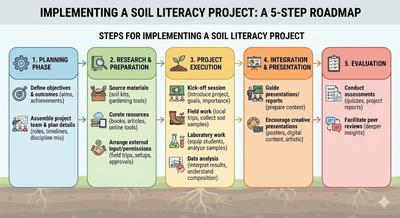
With allies identified, Section 3 helps you channel that collaboration into action. Design a soil project tailored to your school’s space and schedule, whether it’s a month-long worm composting experiment or a single art lesson using soil pigments. Templates and case studies will guide you in creating activities that fit your reality. Engaging primary school students in a soil literacy project enhances their understanding of the environment, agriculture, and sustainability. Following these steps will help you create a comprehensive and impactful soil literacy project that offers your students meaningful learning experiences while fostering an appreciation for the natural world. Before starting your project, consider the pros and cons. This will help you advocate your idea to school stakeholders (your school head, parents, colleagues). Pros: Hands-on learning: Encourages active participation and experiential learning. Interdisciplinary approach: Integrates science, geography, art, and more. Environmental awareness: Promotes understanding of ecological balance and conservation. Skill development: Enhances observation, analytical, and teamwork skills. Local focus: valuing the students' context and the local outdoors Community Involvement - The project could partner with local farms, environmental groups, or conservation initiatives to give children real-world experiences with soil protection, enhancing the impact of the lessons taught in class Cons: Resource intensive: Requires materials and time for proper implementation. Solution: Start with a scalable project by using readily available resources. Partner with local gardening centres or environmental organizations to borrow materials or receive donations. Crowdsource materials from parents or the school community. Weather dependency: Outdoor activities may face disruption due to bad weather. Solution: Plan for indoor backup activities, such as soil testing experiments or using virtual garden simulation software. Set up a small indoor garden using pots or window planters that can be maintained regardless of weather conditions. Safety concerns: Handling soil and tools needs supervision to prevent accidents. Solution: Conduct a safety briefing at the start of the project. Use child-safe tools and ensure adult supervision during all activities involving soil or gardening tools. Organize the students into small groups with sufficient adult supervision to ensure safety standards are maintained. Knowledge gap: You might need extra preparation to cover specialized content. Solution: We’ve got you! Whatever you need to know you will learn by completing this MOOC. If you wish to learn even more, check out the other MOOC of the Curiosoil project (LINK) or reach out for help here (LINK). Before exploring Steps of Action, get inspired by some kids gardening activities here. Steps of action 1. Planning Define objectives: What do you aim to achieve with the project? Gather resources: Secure soil samples, testing kits, gardening tools, and reading materials. Arrange permissions: Obtain necessary approvals for field trips or garden setups. 2. Introduction Kick-off with a storytelling session or video about soil’s importance. Discuss project goals and the importance of soil in ecosystems and daily life. 3. Engagement Divide students into small groups, assigning specific tasks. Activities: Set up a school garden, conduct soil experiments, or create soil-themed art. Guest speakers: Invite local farmers or environmentalists to share insights. 4. Execution Ensure active participation and rotation of roles to expose students to various aspects. Facilitate observations using magnifying glasses and simple microscopes. 5. Documentation Encourage students to keep journals or logs recording their activities and findings. Use photos, drawings, and charts for visual documentation of progress. 6. Presentation Organise an exhibition or presentation day for students to showcase their findings. Include demonstrations of experiments and garden projects. 7. Evaluation Collect feedback from students, parents and teachers to assess the project’s success. Analyse learning outcomes and identify areas of improvement for future projects. 8. Reflection Conduct a debriefing session where students share their experiences and learning. Discuss the long-term impact and potential continuation of soil literacy activities. Write a short reflection on which of these steps you will implement and how. Check out this training (also from an EU funded project) and learn more ideas to train soil stewards.
Links are missing on the "CONS" > "knowledge gap" > "Solution" sentence.
Also on the above sentence, CURIOSOIL must be in all caps as per the project's visual identity guidelines.
Point 8 is not on bold and isn't formatted properly.
TIPS FOR INCLUSIVE SOIL LITERACY EDUCATION
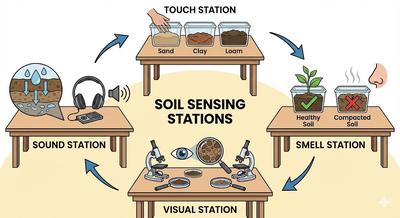
1. Incorporate multi-sensory learning approaches Set up "Soil sensing stations" around the classroom where students rotate through different sensory experiences: Touch station: Soil texture assessment using the "feel method" with different soil types in labelled containers Smell station: Identifying earthy aromas of healthy soils versus compacted ones Visual station: Microscopes or magnifying glasses to observe soil components Sound station: Audio recordings of water percolating through different soil types 2. Connect soil education to local cultural contexts Relate soil science to local agricultural traditions, food systems, and cultural practices specific to your European region. Students can interview family members or research traditional agricultural practices from their cultural backgrounds, creating a classroom "Soil heritage map" showing different approaches to soil management across cultures. This helps make learning relevant for students from different cultural backgrounds. 3. Implement Universal Design for Learning (UDL) Provide flexible learning materials and multiple ways for students to engage with and demonstrate their understanding of soil concepts. Students can analyse soil health using multiple formats: Digital soil testing apps with voice commands Colour-changing test strips with large-print result guides Physical manipulation tests with guided worksheets Group collaboration options for those who benefit from peer support You can learn more about UDL in the next MOOC section. 4. Develop inclusive assessment methods Offer diverse ways for students to demonstrate soil knowledge. Students can create personalized soil literacy portfolios choosing from options like: Soil profile drawings with annotations Video demonstrations of soil tests Audio recordings explaining soil functions Physical soil sample collections with descriptions Digital presentations on soil organisms This respects different communication styles and abilities.
This page isn't formatted properly. There are sentences overlapping and the different tips don´t line up properly with the images.
On question 4 of the quiz, on the "explanation" of the answer "develop" is misspelled.
Also, it would be nice to have a button on the quiz section be able to go back and forth to review the answers during the quiz before submitting.
After marking the quiz as complete I don't a button to go to the next section. I have to click on the MOOC on the top bar. Maybe I missed something.
INCLUSION
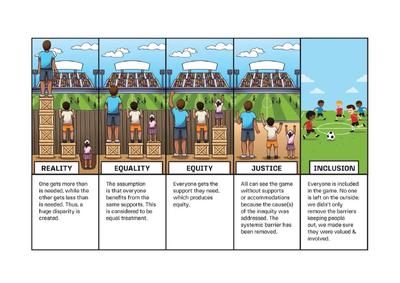
Every child has the right to quality education and learning. This means that when you start thinking about creating a soil literacy project you must consider how to provide the opportunity of participation for all the students in your school, regardless of their various physical and mental abilities. At the same time a soil literacy project is an excellent tool to prove to the students, your colleagues and the wider school community that with careful planning it is indeed possible for everybody to participate. It makes it possible for students whose talents are not in fields traditionally celebrated by the school to have a highly satisfying learning experience that may also boost their classroom performance. Since a soil literacy project needs people acting in diverse roles you can find a suitable job for nearly every student. There will be people who are good at design or knowledgeable about gardening, others will have the opportunity to show off their skills with various tools, yet others will enjoy working with data analysis, etc. Very often an opportunity to show such non-school-like talents raises the social status of a student, and subsequently even their classroom results may increase. When planning the project, you have to consider: physical disabilities, e.g. can your wheelchair user student enter the premises where you will have the project? mental disabilities, e.g. does your autistic student have a talent that could be useful in the project? gender-related issues, e.g. does the school community accept if girls work hard in traditionally male roles? age-related issues, e.g. do the older students accept the opinion of their younger students? national minorities, e.g. does the project include the traditions and cultural references your national minority student can contribute? religious issues, e.g. does the project timetable take into consideration the religious holidays of all the students? In each of these examples, if the answer is not a definitive “YES” you have to think about possible solutions. It is unacceptable to shrug one’s shoulder and make compromises. Naturally, if any of the above examples do not apply, e.g. because you do not have physically disabled students, you can skip considering those issues. However, you still have to be aware of these questions, because e.g. an under/overweight student or one wearing glasses might feel just as incapable of gardening as a wheelchair user. It might take more effort, time and dedication to find a real role for all the students who wish to participate, but eventually it will be much more useful for everybody. At the same time, do not force any student to participate, but make sure that those who are reluctant know that they have a wide range of possible roles. Play cooperative games with them, note their strengths and make suggestions regarding their possible tasks. If you feel that the student would be willing to participate, but their family does not support it (e.g. they feel that it takes too much time and would hinder their academic progress), consider inviting the family to take part in the planning. UNESCO has developed a guide for ensuring inclusion and equity in education in case you want to go deeper on this topic. "Teachers in inclusive systems need to gauge the effectiveness of their teaching for the range of their students and should know what they need to do to enable each student to learn as well as possible" - excerpt from UNESCO's guide. When looking for a solution, it is best to involve the student(s) and their families and ask for their opinion and advice. By acknowledging awareness of the issue, you have taken the first important step towards inclusion and show that you, your school and the soil literacy project consider inclusion an essential starting point. Creating an inclusive environment An inclusive environment is safe in every sense of the word. When planning the venue of your soil literacy project it is necessary to be informed about the various needs of the participants. Beside the more obvious issues like basic safety or wheelchair access, you must consider if the venue is always easily accessible for everybody. The best way to make sure that the venue is acceptable for every participant is to include them in the planning from the very beginning. You should also create a space that is not only physically safe, but where all team members can express their opinion, concerns, fears, but also happiness and content. For this, it is of utmost importance to build trust within the group and to set rules together to make proper feedback possible, but only in a constructive, non-obtrusive way. If your students feel passionate about their work, it is very likely that they will have some clashes from time to time. You need to make sure that they learn to communicate their frustration in a respectful way. Your job is to support a learning process in which the development of the students is the most important goal.
Very nice picture!
Is the "UNESCO guide" a link? If yes, it does not open.
Course Overview - Introduction
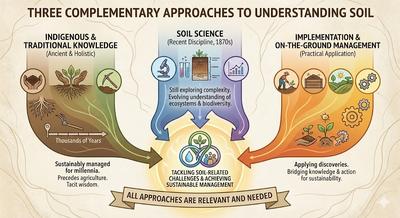
In Module 1, we’ll explore why soil is so important - and why it deserves a central place in our and everyone’s learning. We will also provide key background knowledge about soil to spark curiosity and wonder and increase awareness in classrooms across Europe. Soil is one of the most vital and fascinating parts of our planet. It connects everything: the solid earth (lithosphere), water (hydrosphere), air (atmosphere), and all living things (biosphere). We rely on soil every day - we walk on it, grow food in it, build homes on it, and enjoy nature through it. Yet many people overlook just how essential it is. Soil is quite literally the foundation of life on land. Humans have always had a deep connection with soil, and learning about it helps us understand our environment, our history, and our future. In this module, we’ll look at soil as a living, dynamic ecosystem - a place full of life, culture, and change. We'll also see how soil can inspire curiosity, creativity, and action, helping students feel more deeply connected to the natural world and willing to become active in its protection and restoration, literally from the ground up. This module unearths why soil literacy belongs at the heart of education. We’ll explore soil as a living ecosystem, a cultural heritage, and a catalyst for student agency—equipping you to transform "dirt" into dynamic learning that roots students in their world. So, what makes soil so fascinating and essential? Let’s dig deeper and find out. 1. Soils are full of life. Soils are living ecosystems full of life. In fact, they host more biodiversity than almost any other place on Earth. Only in recent years have scientists - and society as a whole - begun to truly appreciate how important soil life is. The incredible variety of organisms in soil helps support many essential services, like growing food, cleaning water, storing carbon, and maintaining healthy environments. A recent estimate suggests that nearly 60% of all species on Earth live in the soil. These range from larger animals like moles and earthworms, to tiny creatures like springtails, nematodes, and mites, and all the way down to microscopic bacteria and fungi. Just one teaspoon of soil can hold millions of organisms, most of them invisible to the naked eye. And in a single handful of soil, there are more living things than there are humans on Earth - or even stars in the galaxy. 2. Soils are unique, non-renewable, and diverse. Soils are unique, incredibly diverse, and non-renewable within a human time scale. If you dig into the ground in different parts of the world, you’ll see profiles with layers of different colors and characteristics. Also on a smaller scale, soils vary a lot when considering topography or land use – Check out how an urban soil looks different form a forest, arable or wetland soil! The Russian geologist Vasily Dokuchaev (1846-1903) is considered the father of soil science. His big insight is that soil is continually evolving, and is specific to each site. Soil formation is influenced by five main factors: climate, topography (land shape), organisms (plants, animals, and microbes), the type of parent material (rock or sediment), and time. These factors work together to create soils that are complex, living ecosystems, made up of minerals, organic matter, water, air, and a wide range of life - including bacteria, fungi, insects, and plant roots. Soils are not static. They are constantly changing through natural processes like the addition of new material (like fallen leaves), the loss of nutrients (e.g. taken up by plants or lost through leaching into deeper parts of the soil or into groundwater), chemical transformations, and physical mixing. Because of these processes, soils vary greatly from place to place and even change over time. 3. Soilsare essential to our life and wellbeing, and to the functioning of the Earth system. Sometimes soil is called the "living skin of the Earth" - and for good reason. It plays many roles that support life. Soil helps plants grow, giving us food, clothing materials like cotton, and resources like wood. It also acts as a natural filter, cleaning water by trapping harmful substances and preventing them from reaching our food and water supplies. On top of that, soil stores water, helping plants survive during dry periods and reducing the impact of floods. Soil is also full of life. It’s home to countless organisms - from tiny insects and earthworms to small mammals. These creatures keep the soil healthy by breaking down organic matter and recycling nutrients. Some, like ants and earthworms, are known as "ecosystem engineers" because they shape the soil in ways that benefit other living things. Even the tiniest life forms in soil - microbes - play a big role. While some can cause illness, many are essential for our health. They help protect us from allergies and even provide us with medicines like antibiotics. Microbes also influence the air we breathe by controlling the exchange of gases like carbon and nitrogen between the soil and the atmosphere - which plays a major part in climate regulation. Soil also tells stories. It holds clues about the past, like a treasure chest or a time machine. Over time, soil covers and preserves remains of past human life - ancient tools, buildings, bones, and pottery. When archaeologists uncover these items, we learn more about how people lived, what they valued, and how our societies have changed. Despite what we already know there's still so much left to discover, especially about the hidden world of microscopic life in the soil. Unfortunately, most people don’t give soil much thought, even though our lives depend on it every day. That’s where we come in. Together, we can help spread the word about the wonders of soil - and why it’s worth and essential protecting, studying, and celebrating. 4. Soilsare vulnerable Soils around the world are under threat, and many are being damaged - a process known as soil degradation. This happens in different ways, but it’s often caused directly by human activity. Examples for processes that threaten soils (or soil health) are: soil organic matter and biodiversity decline, erosion, compaction, salinisation, pollution and sealing (and more), through various human activities like intensive agriculture, deforestation, other land use changes (including land grabbing or soil sealing), climate change (e.g. through wildfires, droughts, and windstorms) and others including desertification. Currently, more than half of the world’s soils are considered degraded and more than 60% of soils in Europe are in an unhealthy condition. This means they’re losing their ability to function properly - to support plant life, store water, filter pollutants, and cycle nutrients and therefore essential for food security, water availability and quality, contributing to flood control, functioning of ecosystem, human health, buffering of climate change impacts and much more, also causing direct and indirect economic costs or losses, which are estimated between 50 billion to 100 billion Euros a year in the EU alone. Furthermore, agriculture and with-it intensive soil use and often degradation is the major factor in exceeding the planetary boundaries, where seven of nine boundaries have been breached. Soils and their human use, misuse and abuse also reflect not only our extractive and utilitarian often profit driven relation to this essential resource (like with all other ‘natural resources’), but also show up in social relations, inequality and inequity, through who has or has not access and use rights and availability to soil and related resources and uses (e.g. land rights, land grabbing, etc.) Understanding how land use affects soil is essential. By learning and teaching about soil, we can help protect this vital resource and make sure it continues to support life - now and for future generations. 5. Soils can be healed Protecting soil starts with awareness and action. Education, citizen science, and community outreach help people reconnect with soil and understand its value — leading to healthier soils and stronger communities. We can care for soil in three key ways: Prevention – Avoid damage before it happens, like stopping deforestation or overgrazing that can lead to erosion, landslides, or loss of soil life. Mitigation – Reduce the harm of necessary land use, for example by using terraces to slow erosion or leaving crop leftovers to maintain organic matter. Restoration – Heal damaged soils by planting trees, adding compost or green manure, and supporting soil organisms like earthworms that help rebuild life underground. It’s also important to remember that soil health depends on context. What makes soil “healthy” in one place may look very different in another, depending on the climate, landscape, and how the land is used. That’s why local knowledge and understanding are essential when we talk about caring for soil. 6. Three Complementary Approaches to Understanding Soil Soils can be approached and understood in different ways. and all of them are relevant and needed to tackle soil-related challenges. Soils have often been sustainably managed by indigenous peoples and communities using traditional/tacit knowledge for thousands of years and still are in many parts of the world. This knowledge of soils precedes and goes beyond agriculture. Soil science is a recent discipline (1870s) and the complexity of soils is still not fully scientifically understood. Recent discoveries on soil ecosystems and soil biodiversity still needs to be explored further and more so implemented on the ground to achieve sustainable management of soils. This diversity of knowledge isn’t just academic, it’s practical. For teachers, these three pathways (scientific, agricultural, Indigenous) offer lenses to make soil literacy resonate across cultures and subjects. For school leaders, they provide frameworks to design inclusive, community-anchored programs that honor local wisdom while meeting curricular goals. Beyond the field of soil scientists, different groups have different understandings of what soils are. The ways in which soils are known, represented, and understood are diverse. In different regions, farmers, foresters, government officials, soil researchers, or environmental NGOs know soil in different ways and attach different meanings to it [5]. There is also the historic context of how soil science has emerged and developed as a topic seeking relevance within the scientific community and governance spheres over the past one hundred years, which adds another level of complexity to the discussion. Accounts of the history of soil science usually locate the origins of the discipline in the late 1800 with Vasiliy Dokuchaev [6], then the first international soil science congresses and conferences in 1909, 1924, and 1927 [7]. Based on Dokuchaev’s work, Hans Jenny developed, in the 1940s, a conceptual model of soil formation factors. In the early 1900s, soil-related concepts started developing and being published, such as soil fertility, soil productivity, and soil conservation. Before the 1970s, soil knowledge was mainly related to agricultural practices, and as technologies started developing (e.g., mechanisation, chemicals, and modified plant crops, namely the “first green revolution” [8]), there was a shift in this concept. 1. Scientific soil knowledge. Soil science is a recent discipline (1870s) and the complexity of soils is still being understood. Recent discoveries on soil ecosystems and soil biodiversity still needs to be implemented to achieve sustainable management of soils. Can be considered to start from Dokuchaev in the 1870s. Historically linked to agricultural expansion in the Eurasian steppe and Northern American prairie. 2. Traditional soil knowledge linked to agricultural management. Practitioners' knowledge, often in tacit form, and used for day to day management of agroecosystems, especially relevant in the case of smallholders, family farms and indigenous communities. 3. Soil knowledge before and beyond agriculture. Soils have been sustainably managed by indigenous people and communities using traditional/tacit knowledge for thousands of years and still are in many parts of the world. This soil knowledge is often linked to holistic landscape management and to specific activities like foraging from tubers and roots, hunting underground prey, building dwellings, digging holes to cook or preserve food, as dwellings, or as burial; extracting pigments and clay for artistic, ritual, cosmetic and medicinal purposes, selective burning or backburning on a larger landscape scale to replenish soils with nutrients and/or to selectively manage vegetation or landscape (e.g. for hunting of large animals) and reduce fuel load, nutrient management (e.g. terra preta in the Amazon), etc It is especially important to acknowledge that soil knowledge precedes and goes beyond agriculture, as most literature links soil knowledge with agriculture and the neolithic revolutions. Brevik and Hartmink (2010), when providing a historical perspective on soil knowledge, fall into an apparent contradiction when stating that “soil knowledge dates to the earliest known practice of agriculture about 11,000 BP.” and then admitting that “humans have always had an intimate relation with the soil” These knowledge systems aren’t competing, they’re complementary threads in the same tapestry. When we braid them together in our schools, we empower students to see soil not as "dirt," but as a living library of ancestral innovation, scientific discovery, and ecological kinship. What is soil? “A natural body consisting of layers (soil horizons) that are composed of weathered mineral materials, organic material, air and water “ All definitions | FAO SOILS PORTAL | Food and Agriculture Organization of the United Nations What is soil health? The Intergovernmental Technical Panel on Soils (ITPS) defines soil health as “the ability of the soil to sustain the productivity, diversity, and environmental services of terrestrial ecosystems”. What is soil literacy? Johnson et al. defines soil literacy as a combination of attitudes, behaviours, and competencies required to make sound decisions that prevent soil degradation, promote soil health, and ultimately contribute to the maintenance and enhancement of the natural environment. Frontiers | Boosting soil literacy in schools can help improve understanding of soil/human health linkages in Generation Z “The Soil Mission Implementation plan understands soil literacy as both a popular awareness about the importance of soil and specialised and practice-oriented knowledge related to achieving soil health [3]. A more detailed definition of what soil literacy entails has been provided by Johnson et al., 2020 [4]: a combination of attitudes, behaviours, and competencies required to make sound decisions that promote soil health and ultimately contribute to the maintenance and enhancement of the natural environment.” Land 2025, 14(7), 1372; https://doi.org/10.3390/land14071372 Conclusion - from the soil to the whole society: The case for soil literacy rests on recognizing that soil knowledge is not only older than agricultural practices, but also more fundamentally essential to human life and wellbeing. Acknowledging the different types of soil related knowledge, practices and wisdomcan also help decolonise soil science and make it more inclusive, fostering dialogue between scientists and practitioners. A broader perspective on soil knowledge and its practices can also connect soil science with social sciences , humanities, history and artistic disciplines and become relevant and important in our everyday lives. Soils touch and shape the lives of all of us, hence it's about time to know, understand, relate to, interact and co-create a mutually beneficial relationship with soils and hence with life itself as part of designing flourishing and regenerative futures for all of life. So what are you waiting for – get your hands into the soil!
Missing a space on point 3. "Soils are" and point 4. "Soils are"
On the Soils are vulnerable image, was it intentional to repeat the same human drivers and activities on both sides?
On point 5, Soils can be healed. An important action is to protect trees and bushes already established (usually not understood under deforestation because deforestation is usually seen as large scale actions).
Besides partnering with the cafeteria, also partner with the teacher´s lounge and compost coffee grounds and paper tea bags
Forum link goes to error page.