
TIPS FOR INCLUSIVE SOIL LITERACY EDUCATION
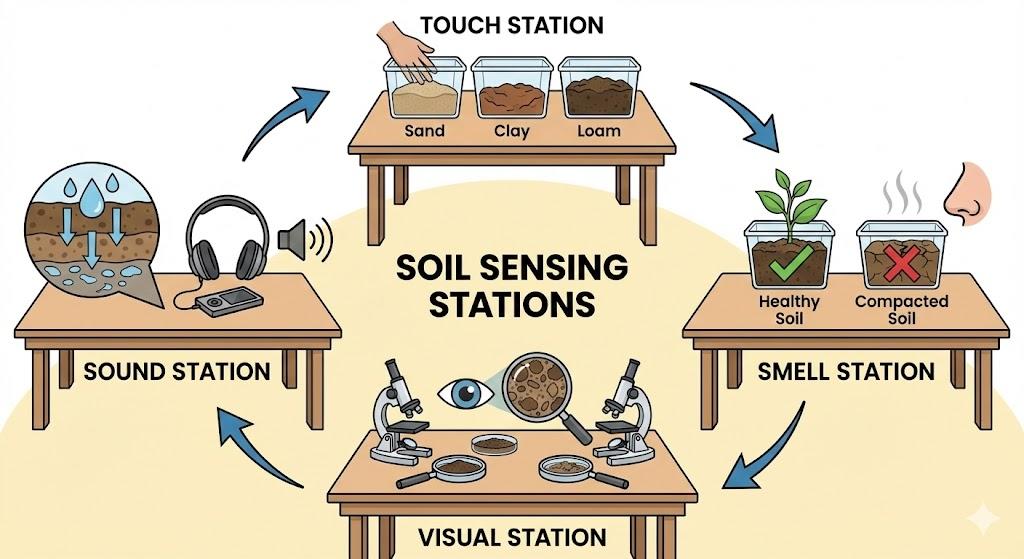
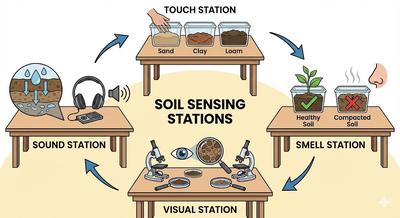
1. Incorporate multi-sensory learning approachesSet up "Soil sensing stations" around the classroom where students rotate through different sensory experiences:
|
 |
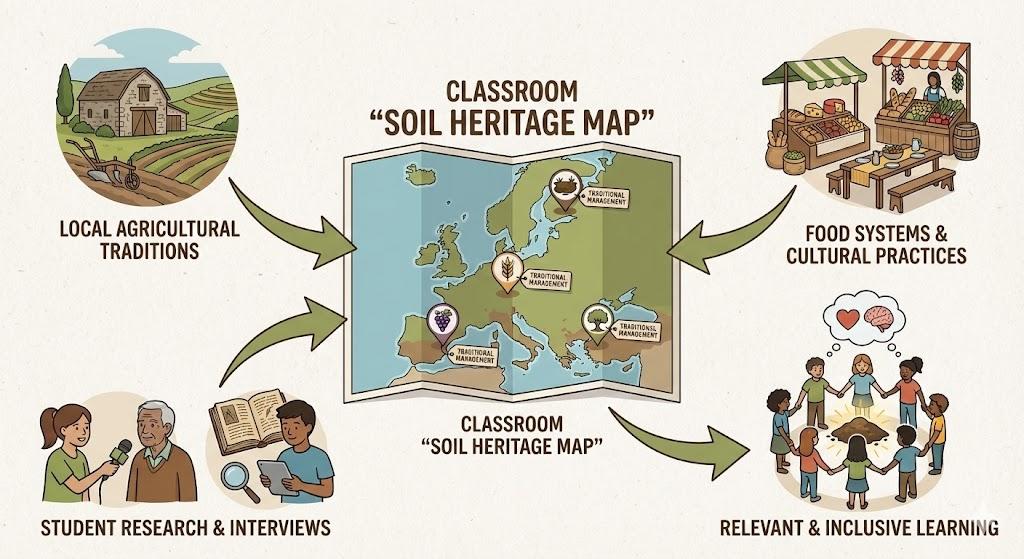
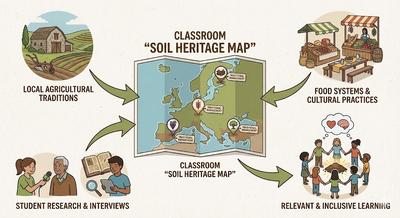
2. Connect soil education to local cultural contextsRelate soil science to local agricultural traditions, food systems, and cultural practices specific to your European region. Students can interview family members or research traditional agricultural practices from their cultural backgrounds, creating a classroom "Soil heritage map" showing different approaches to soil management across cultures. This helps make learning relevant for students from different cultural backgrounds. |
 |
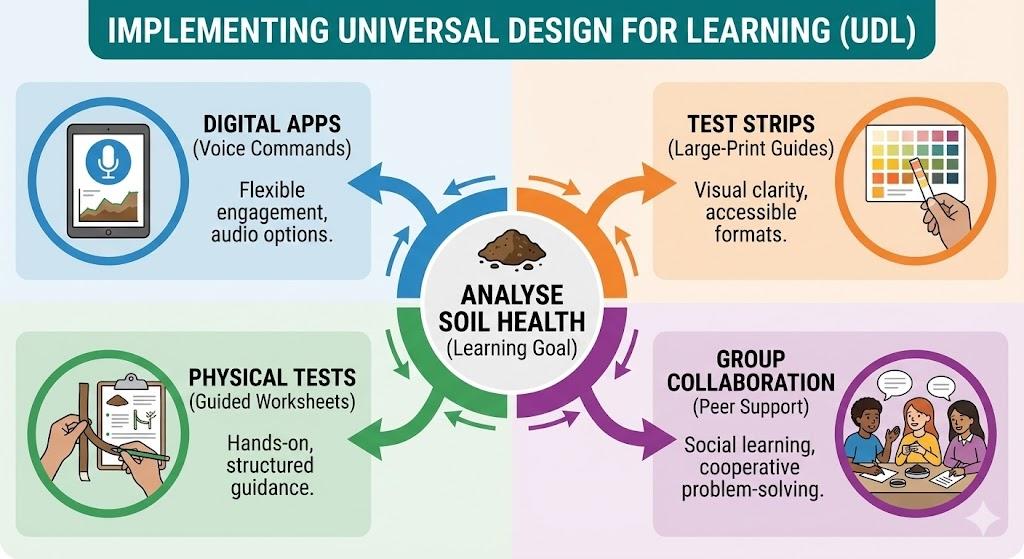
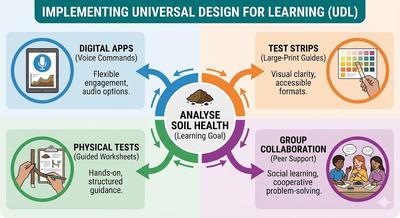
3. Implement Universal Design for Learning (UDL)Provide flexible learning materials and multiple ways for students to engage with and demonstrate their understanding of soil concepts. Students can analyse soil health using multiple formats:
You can learn more about UDL in the next MOOC section. |
 |
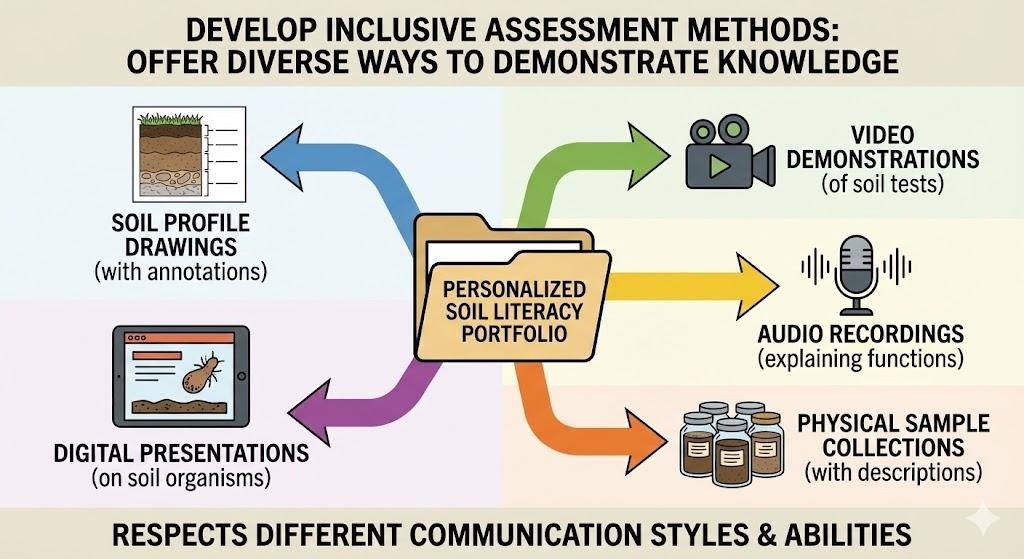
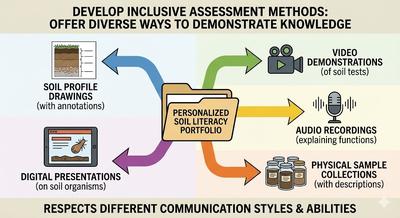
4. Develop inclusive assessment methodsOffer diverse ways for students to demonstrate soil knowledge. Students can create personalized soil literacy portfolios choosing from options like:
This respects different communication styles and abilities. |
 |

The images should be lined with the text. The images are very relevant for teachers.
agree with the Armando's feedback.
Pictures very good for a quick grasp of the information.
This page isn't formatted properly. There are sentences overlapping and the different tips don´t line up properly with the images.
On question 4 of the quiz, on the "explanation" of the answer "develop" is misspelled.
Also, it would be nice to have a button on the quiz section be able to go back and forth to review the answers during the quiz before submitting.
After marking the quiz as complete I don't a button to go to the next section. I have to click on the MOOC on the top bar. Maybe I missed something.