
INCLUSION
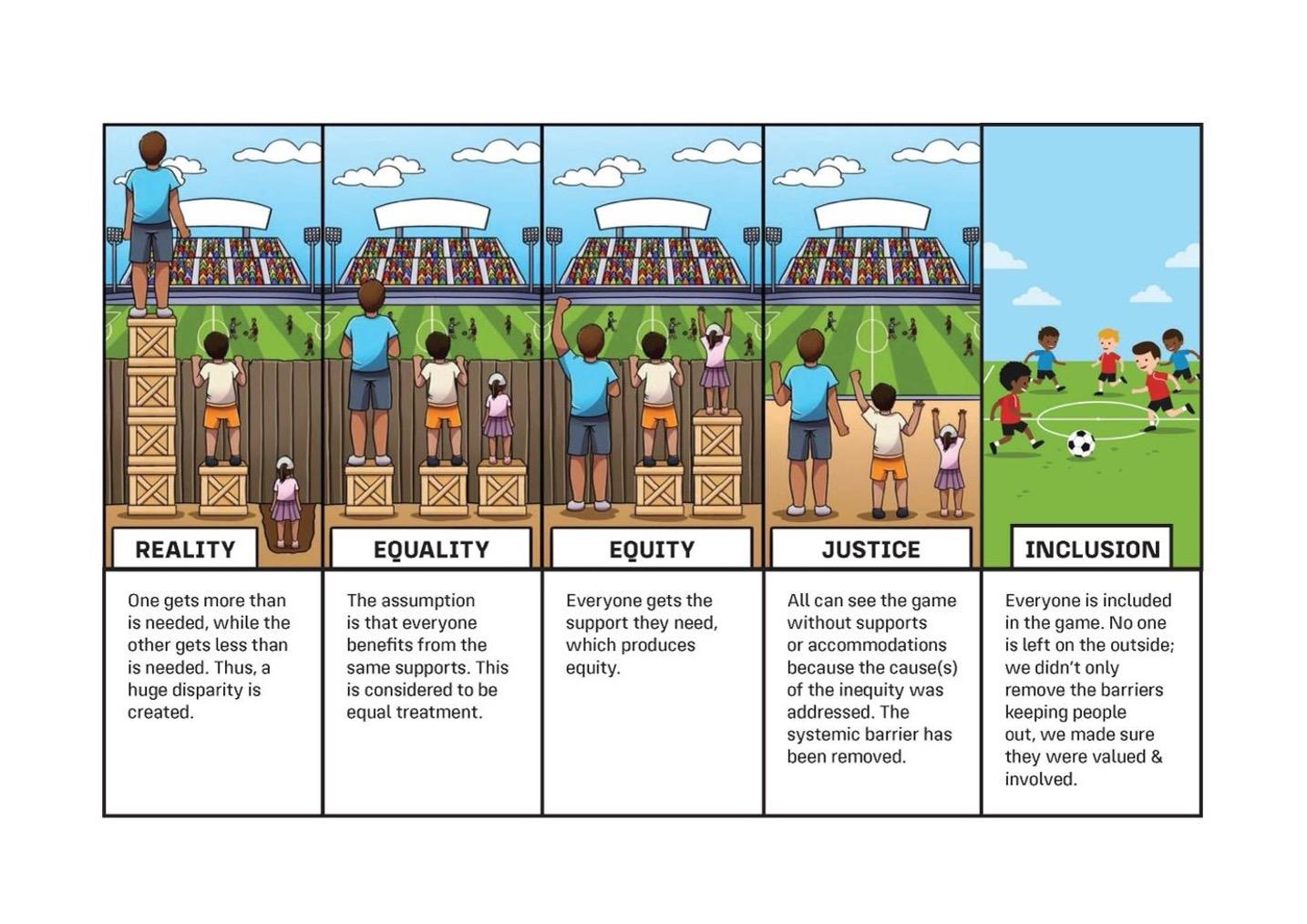
Every child has the right to quality education and learning. This means that when you start thinking about creating a soil literacy project you must consider how to provide the opportunity of participation for all the students in your school, regardless of their various physical and mental abilities.
At the same time a soil literacy project is an excellent tool to prove to the students, your colleagues and the wider school community that with careful planning it is indeed possible for everybody to participate. It makes it possible for students whose talents are not in fields traditionally celebrated by the school to have a highly satisfying learning experience that may also boost their classroom performance. Since a soil literacy project needs people acting in diverse roles you can find a suitable job for nearly every student. There will be people who are good at design or knowledgeable about gardening, others will have the opportunity to show off their skills with various tools, yet others will enjoy working with data analysis, etc. Very often an opportunity to show such non-school-like talents raises the social status of a student, and subsequently even their classroom results may increase.
When planning the project, you have to consider:
-
physical disabilities, e.g. can your wheelchair user student enter the premises where you will have the project?
-
mental disabilities, e.g. does your autistic student have a talent that could be useful in the project?
-
gender-related issues, e.g. does the school community accept if girls work hard in traditionally male roles?
-
age-related issues, e.g. do the older students accept the opinion of their younger students?
-
national minorities, e.g. does the project include the traditions and cultural references your national minority student can contribute?
-
religious issues, e.g. does the project timetable take into consideration the religious holidays of all the students?
In each of these examples, if the answer is not a definitive “YES” you have to think about possible solutions. It is unacceptable to shrug one’s shoulder and make compromises. Naturally, if any of the above examples do not apply, e.g. because you do not have physically disabled students, you can skip considering those issues. However, you still have to be aware of these questions, because e.g. an under/overweight student or one wearing glasses might feel just as incapable of gardening as a wheelchair user.
It might take more effort, time and dedication to find a real role for all the students who wish to participate, but eventually it will be much more useful for everybody. At the same time, do not force any student to participate, but make sure that those who are reluctant know that they have a wide range of possible roles. Play cooperative games with them, note their strengths and make suggestions regarding their possible tasks. If you feel that the student would be willing to participate, but their family does not support it (e.g. they feel that it takes too much time and would hinder their academic progress), consider inviting the family to take part in the planning.
UNESCO has developed a guide for ensuring inclusion and equity in education in case you want to go deeper on this topic. "Teachers in inclusive systems need to gauge the effectiveness of their teaching for the range of their students and should know what they need to do to enable each student to learn as well as possible" - excerpt from UNESCO's guide.
When looking for a solution, it is best to involve the student(s) and their families and ask for their opinion and advice. By acknowledging awareness of the issue, you have taken the first important step towards inclusion and show that you, your school and the soil literacy project consider inclusion an essential starting point.
Creating an inclusive environment
An inclusive environment is safe in every sense of the word.
When planning the venue of your soil literacy project it is necessary to be informed about the various needs of the participants. Beside the more obvious issues like basic safety or wheelchair access, you must consider if the venue is always easily accessible for everybody. The best way to make sure that the venue is acceptable for every participant is to include them in the planning from the very beginning.
You should also create a space that is not only physically safe, but where all team members can express their opinion, concerns, fears, but also happiness and content. For this, it is of utmost importance to build trust within the group and to set rules together to make proper feedback possible, but only in a constructive, non-obtrusive way. If your students feel passionate about their work, it is very likely that they will have some clashes from time to time. You need to make sure that they learn to communicate their frustration in a respectful way. Your job is to support a learning process in which the development of the students is the most important goal.

From an evaluative perspective, it could be beneficial for the MOOC to present more concrete examples or case studies illustrating how these inclusive intentions are translated into practice, as well as indicators that allow teachers to monitor the impact of these strategies on students’ learning and well-being. Additionally, a deeper examination of institutional constraints (time, resources, teacher training) could enrich participants’ critical reflection.
Picture is very good. I feel the text a little dogmatic. We want to make teachers aware but they have the professional knowledge to adjust this information to their reality. Maybe ask a task associated to this information? E.g., to give examples in the forum of what could be a place for their soil literacy project and how they would increase inclusion/access to that place?
Very nice picture!
Is the "UNESCO guide" a link? If yes, it does not open.