
ART SUBJECTS AS THERAPY
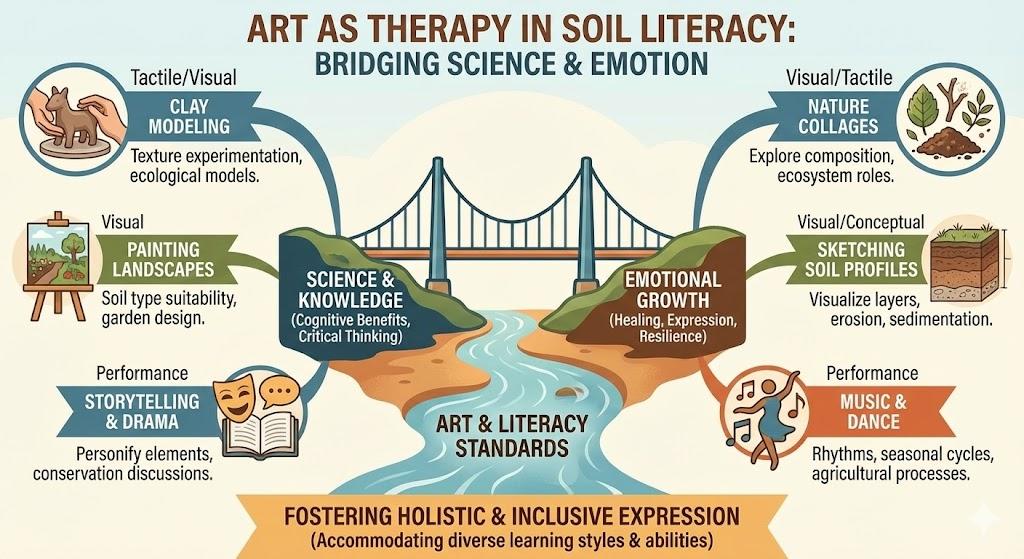
Now, let’s channel emotional awareness into creativity. Section 4 dives into art as therapy, showing how soil-themed projects—clay sculpting, nature collages, or storytelling with soil-dyed fabrics—can help young learners express feelings they can’t yet articulate. These activities aren’t just “craft time”—they’re bridges between science and emotional growth, all while meeting art and literacy standards.
Art subjects possess unique healing power in education, offering emotional, cognitive, and social benefits to primary school children. Through art, students find a means of expression, articulating emotions and thoughts that they might not have words for yet, thereby fostering emotional well-being and resilience. The creative process in art improves fine motor skills and enhances problem-solving abilities, attention to detail, and critical thinking, which are vital in a child's development. Moreover, art promotes collaboration and communication, essential social skills that nurture empathy and understanding among peers.
Integrating art into the curriculum, especially for subjects like soil literacy, can amplify these benefits, allowing children to connect emotionally and personally with the natural world. Art-based activities not only teach environmental science but also highlight the interplay between art and ecology.
Examples of art activities that develop soil literacy
-
Nature collages: Using soil, leaves, and twigs to create collages helps students explore soil composition and its role in ecosystems.
-
Clay modeling: Allows students to experiment with soil textures and create models of animals and plants that rely on soil, illustrating ecological relationships.
-
Painting landscapes: Students depict landscapes or garden designs, integrating knowledge about different soil types and their suitability for various plants.
-
Sketching soil profiles: Encourages children to visualize soil layers, explaining concepts like erosion and sedimentation through creative expression.
-
Storytelling and drama: Allows students to personify elements of the ecosystem, giving voice to soil creatures or plants, sparking discussions on conservation and biodiversity.
-
Music and dance: Highlights rhythms and cycles of nature, symbolizing seasonal changes and agricultural processes dependent on healthy soil.
By embracing these art activities, you can create a nurturing environment that not only makes learning about soil engaging and memorable but also fosters a holistic educational experience. This approach inspires curiosity about the natural world and nurtures a generation of environmentally literate and compassionate individuals. (R.R.) Accommodate students with different learning styles and abilities (e.g. non-verbal students can communicate through music or visual arts).
How would you use art in your class when teaching about soil? Write a short reflection!
Conclusion
Soil literacy in primary schools is about roots: grounding lessons in kindness, creativity, and care. Through this module, you’ve explored how to design activities that welcome all little hands, whether they’re molding clay, sorting seeds, or sharing family stories about farming. You’ve learned to see soil not just as a science topic, but as a medium for healing, inclusion, and imagination.
Remember: You don’t need a perfect garden or expensive tools to start. A single pot of soil, a handful of recycled materials, and a willingness to listen can transform your classroom. When lessons get messy (and they will!), return to this module’s core idea: soil is a teacher. It reminds us that growth takes time, that diversity strengthens ecosystems, and that even the tiniest seed can thrive in the right conditions. Your students are those seeds. With the strategies you’ve learned here, you’re ready to help them bloom.

This lesson should benefit from concrete examples of activities that include some of elements presented. For example, in the music and dance it is not clear how to articulate this performance type with the seasonal changes.