
Integrating Soil Literacy in Extracurricular Activities
Soil literacy doesn’t end when the school bell rings—it’s a living lesson that thrives in everyday life. Section 5 invites you to step outside the formal curriculum and explore small-but-mighty ways to deepen learning. Partner with your cafeteria to compost scraps in reused containers or organise a “soil art gallery” using student creations displayed in the library. These activities don’t require extra funding or perfect conditions—just a willingness to see soil as a starting point for play, observation, and quiet moments of connection. Whether your school has a sprawling garden or a single potted plant, you’ll find ideas here to meet your students where they are, nurturing curiosity without adding to your already-full plate.
Extracurricular activities can offer students additional opportunities to explore and connect with nature outside of the standard curriculum.
The following list of options might inspire you on how to integrate soil literacy in extracurricular activities with your students. Choose one you like from the list and reflect on how you would implement it.
For ages 6-8:
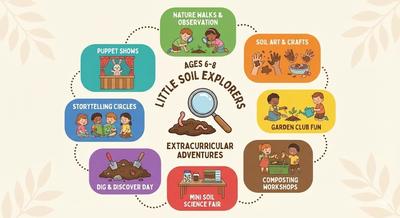
Nature walks: Organize guided nature walks focusing on observing soil, plants, and animals. Equip children with magnifying glasses to explore the ground closely.
Soil art projects: Lead a session where kids create paintings or crafts using natural soil pigments or items found in soil like leaves and twigs.
Garden club: Start a school garden club where kids plant seeds, care for plants, and learn about the role of soil in plant growth. Include simple soil care tasks like watering and weeding.
Composting workshops: Organize workshops where children can learn about composting using kitchen scraps to create nutrient-rich soil.
Mini soil science fair: Host a mini science fair where each child presents a small project related to soil, such as growing beans in jars or creating soil layer models.
Dig and discover day: Plan a special day for digging in designated soil patches, searching for worms, rocks, and discovering what’s beneath the surface.
Storytelling circles: Arrange storytelling circles where children share stories or listen to tales about the importance of soil and nature.
Soil and nature crafts: Create potpourri bags using dried soil ingredients like herbs and flowers, discussing the role of soil in growing these plants.
Puppet shows: Organize puppet shows featuring characters like “Peter Rabbit” to teach children about soil health in a fun way.
Simple soil science club: Form a club where children perform simple experiments like sprouting seeds in different types of soil or examining soil with a magnifying glass.
STORY:
The Magic Soil of Green Valley
Once upon a time, in the lush and lively land of Green Valley, there lived a curious little fairy named Flora. Flora loved to sprinkle her magic all around the valley, helping flowers bloom and trees grow tall. Her favorite part of nature was the soil, which she called "the magic carpet of the earth."
One sunny morning, as Flora flitted about playing with the dew drops, she noticed something unusual. The flowers seemed droopy, and the vegetable patches were not as green as they used to be. Flora's heart sank. What could be wrong?
Determined to find out, Flora fluttered her delicate wings and zoomed towards Elder Elm, the oldest and wisest tree in Green Valley. "Elder Elm," Flora chirped, "Why are the plants unhappy today?"
Elder Elm rustled his leaves and replied in a deep, gentle voice, "Dear Flora, the soil beneath us needs care and love. It is worn out and tired, yearning for nourishment to work its magic again."
Flora pondered over Elder Elm's words and decided to call a meeting with her fairy friends. Together, they crafted a plan to heal the tired soil. The fairies danced and spun, gathering fallen leaves, twigs, and bits of fruit from the forest. They formed a magical compost heap in the corner of the valley.
As they worked, Flora spread kindness and gratitude over the soil, whispering secrets of renewal and hope. She used her sparkling wand to sprinkle tiny drops of rain mixed with fairy dust, gently kneading it into the earth.
Days passed, and the soil began to feel stronger and richer. Green shoots started peeking through the surface, the flowers lifted their cheerful heads, and the trees swayed joyfully with the breeze. The valley buzzed with life and laughter once more.
In gratitude, the soil gifted Flora and her friends with the most beautiful garden Green Valley had ever seen. It bloomed with the brightest colors, filling the air with a sweet, fragrant aroma.
From that day on, Flora and her fairy friends became the keepers of the soil, visiting it every now and then to offer their tender care. And the soil, in return, promised to keep Green Valley flourishing forever.
So, whenever you walk in nature, remember Flora's tale and treat the soil with care, for it holds the magic to grow the world around us strong and fair.
Get inspired by The Magical world of soil biodiversity - A collection of 10 children’s stories from around the world

For ages 9-14:
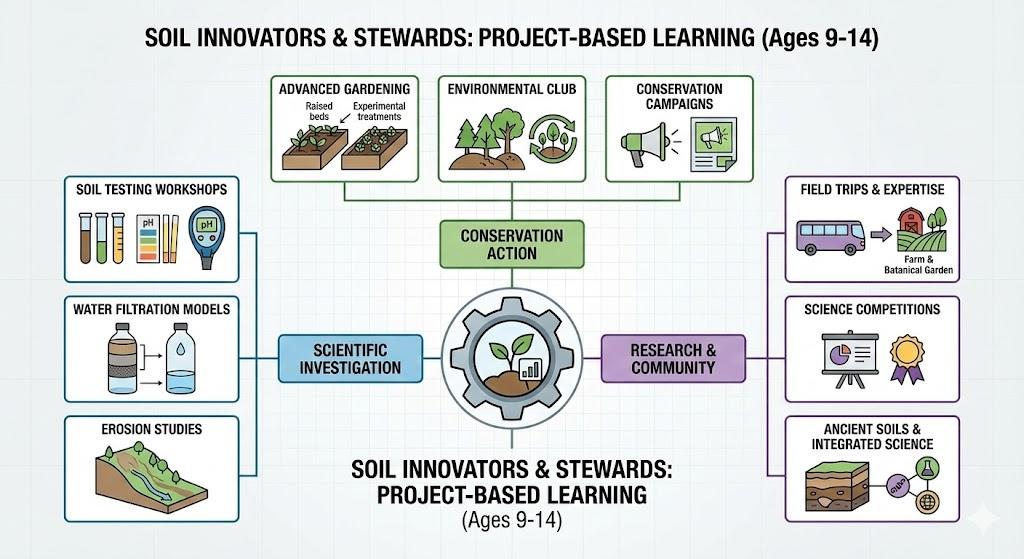
Soil testing workshops: Conduct workshops where students test soil samples for pH, moisture, and nutrient levels using simple kits.
Advanced gardening projects: Organize projects where students create and manage small-scale gardens, experimenting with different soil treatments and plant types.
Environmental club: Develop an environmental club focusing on soil conservation, leading initiatives such as tree planting and soil restoration projects.
Field trips to farms or botanical gardens: Plan educational trips to local farms, botanical gardens, or nature reserves to learn about soil use and management directly from experts.
Soil erosion workshops: Arrange workshops or projects on soil erosion and its impact, encouraging students to come up with practical solutions to prevent erosion.
Soil and water filtration projects: Guide students in projects that demonstrate how soil helps in water filtration. This could include building simple filter models using different soil types.
Soil conservation campaigns: Engage students in campaigns to educate the community about soil conservation, creating posters, and informational brochures.
Soil science competitions: Host competitions where students present research on local soil types, their uses, and conservation methods. Encourage innovative presentation formats like digital storytelling.
Exploration of ancient soils: Encourage projects exploring how historical sites and ancient civilizations interacted with the soil, leading to discussions on sustainability.
Integrated science projects: Coordinate projects integrating soil studies with other sciences such as chemistry (soil nutrients), biology (microorganisms), and geography (landforms).
Forum reflection
How can you connect soil to one subject you teach this week?
What’s one small step to try (e.g., a soil texture activity in math, a soil story in reading)?
What might get in the way? How could you solve it (e.g., use recycled jars instead of lab tools)?
You don’t need a big plan, start small.
This Soil Games page or this one may give you inspirations for creative ways of play and learn about soil.
Soil isn’t just a topic, it’s a lens. Through this module, you’ve explored how to turn soil literacy into a bridge between your classroom and the community. You’ve identified your goals, mapped allies, designed projects, and discovered how soil can weave through every subject and beyond. Remember: You don’t need a perfect plan or a green thumb to start. A single pot of soil, a five-minute chat about earthworms, or a student’s question about “why dirt matters” can ignite a journey.
As you move forward, return to this Module when in doubt or schedules overwhelm. Your work isn’t just about teaching soil; it’s about nurturing a generation that sees the ground beneath them as alive, connected, and worth caring for.

Besides partnering with the cafeteria, also partner with the teacher´s lounge and compost coffee grounds and paper tea bags
Forum link goes to error page.