
Collective Efficacy
Module 3.C, Cultivating Collective Efficacy, provides tools to turn individual interest into shared commitment. Learn to structure "soil solution teams" blending science, arts, and facilities staff; use protocols like "success mapping" to highlight small wins; and delegate authority so soil projects become everyone’s mission, not just your mandate.
Cultivating collective efficacy in schools is crucial for driving meaningful and sustainable educational improvements. This concept refers to the shared belief among educators that through joint effort, they can positively impact student outcomes. For European school heads, fostering collective efficacy means building a collaborative culture where all staff members feel empowered and confident in their collective potential to enhance learning.
Collective efficacy enhances motivation among teachers and staff, leading to a more resilient and adaptive educational environment. It encourages the sharing of best practices, inclusive decision-making, and mutual support, ultimately benefiting student learning experiences and achievement.
Take a look at the following examples. Choose one or come up with a different idea that fosters collective efficacy. Note down a few thoughts on how you would present this idea to your staff.
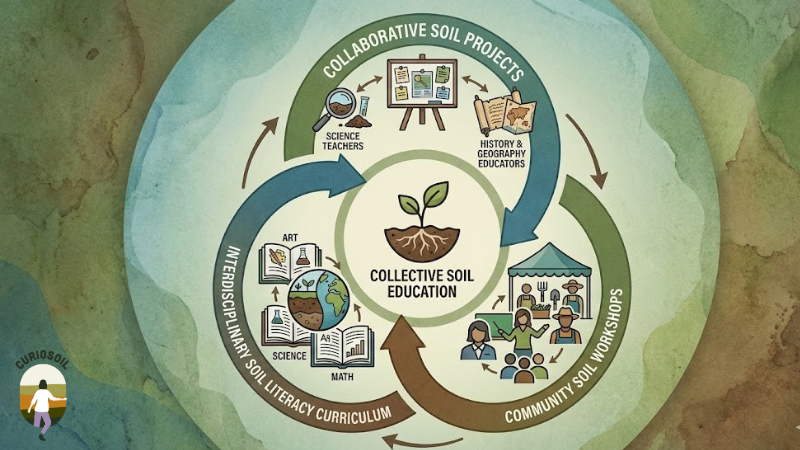
-
Collaborative Soil Projects
Imagine a school-wide initiative where teachers across disciplines collaborate to develop a project focused on soil health. Science teachers could guide students in conducting soil quality tests, while history and geography educators could explore soil's role in historical agricultural practices. This joint effort not only enriches curricula but also reinforces the power of collaborative learning to address complex topics. -
Community Soil Workshops
School heads can organize workshops on sustainable soil practices for the wider community. By involving teachers, students, and local experts (farmers, gardeners), these events become a platform for sharing knowledge and practices, exemplifying how collective action can lead to increased community engagement and learning. -
Interdisciplinary Soil Literacy Curriculum
Developing an interdisciplinary curriculum around soil literacy can foster a sense of shared purpose among teachers. By integrating soil-related topics into various subjects, educators work together to provide students with a holistic understanding of soil's ecological and economic importance. This collective effort reinforces the belief that every teacher's contribution is crucial for holistic education.
If you are interested to learn more, read HEADstart#7: Stimulating collective self-efficacy
 Please log in or register to post a comment