
TRAUMA-CONSCIOUS EDUCATION
Even playful soil projects can stir big emotions. A composting lesson might remind a child of a lost pet; a discussion about “healthy soil” could trigger anxiety in a food-insecure student. Section 3 explores trauma-conscious practices, offering gentle ways to frame soil activities (e.g., focusing on “care” rather than “decay”) and cues to recognize when a child needs space. You’ll learn to balance honesty with hope, ensuring soil literacy comforts, rather than overwhelms.
Before diving into practical terms, it can be valuable to build a foundational understanding of trauma's impact on learning and school environments. A starting point is the US National Education Association (NEA), which offers comprehensive reflections and resources specifically designed for educators on creating Trauma-Informed Schools (TIS). The NEA provides practical guidance, policy recommendations, classroom strategies, and professional development tools focused on shifting school culture to recognize signs of trauma, respond supportively, prevent re-traumatization, and foster resilience among all students.
On a broader theoretical and societal level, exploring the extensive body of work by Dr. Gabor Maté offers profound insights into the origins and pervasive effects of trauma, particularly childhood trauma. Dr. Maté, a renowned physician and author (known for works like Scattered Minds and The Myth of Normal), delves deeply into the mind-body connection, addiction, stress, and how early adverse experiences shape development and behavior. His vast library of accessible online material – including lectures, interviews, podcasts, and articles – provides a crucial lens for understanding the why behind the behaviors and challenges educators encounter, emphasizing compassion and the healing power of secure relationships.
Introducing Potentially Traumatic Topics
Teaching topics such as soil threats, climate change, the Holocaust, racial injustices, war, or genocide is crucial in education. These subjects help students develop critical thinking, empathy, resilience and civic responsibility. However, they can also cause emotional distress or trigger trauma in students. Teaching such topics requires sensitivity, preparation, and support. By adopting trauma-informed approaches, fostering resilience, and providing students with the tools to take action, professional educators can ensure that these lessons contribute to both personal growth and a healthier society.
The following list of to-dos will help you make sure that you have covered all aspects.
If you are interested, you can check out the full guide here.
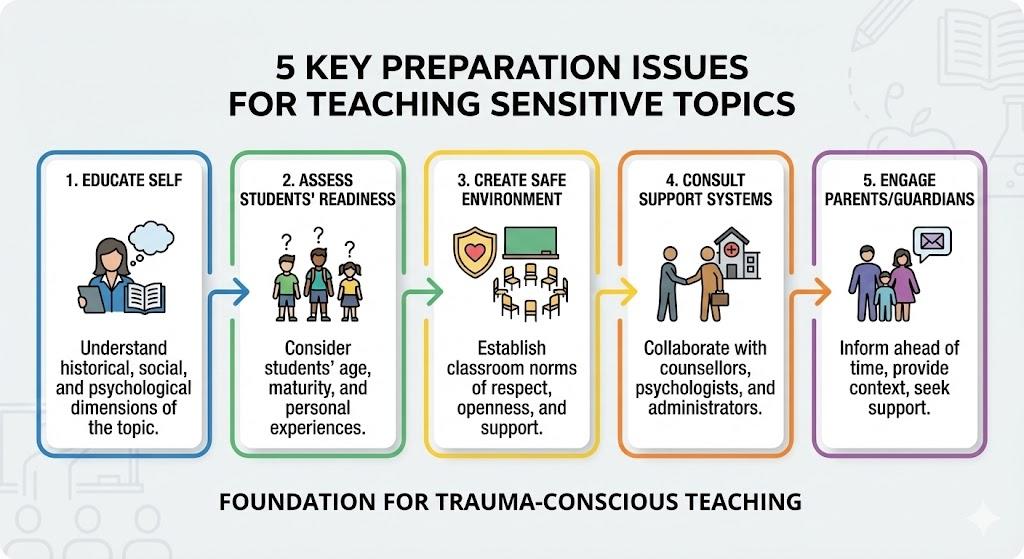
1. Preparing to Teach Sensitive Topics
Before addressing sensitive or potentially traumatic subjects, teachers should:
- Educate Themselves: Understand the historical, social, and psychological dimensions of the topic.
- Assess Students’ Readiness: Consider students’ age, maturity, and personal experiences.
- Create a Safe Learning Environment: Establish classroom norms of respect, openness, and support.
- Consult School Policies & Support Staff: Collaborate with counsellors, school psychologists, and administrators to ensure adequate support structures are in place.
- Engage with Parents & Guardians: Inform parents ahead of time about the topics being covered. Provide context, resources, an open channel for discussion, and seek their approval and support for teaching about the topic.
- Use Trauma-Informed Approaches: Recognize signs of distress and adopt strategies that prioritize student well-being.
- Have a clear picture of the purpose of addressing the topics: what, how and why.
2. Introducing Difficult Topics Safely
To prevent harm while addressing these issues:
- Provide Content Warnings: Inform students in advance when discussing distressing topics.
- Use Age-Appropriate Materials: Select resources suited to the cognitive and emotional development of students. Be aware that visual content can have more traumatising effect than texts.
- Encourage Critical Thinking, Not Fear: Frame discussions in ways that empower students rather than overwhelm them.
- Focus on Resilience & Positive Action: Highlight examples of courage, resistance, and solutions to counter feelings of helplessness.
- Allow Opt-Out Options: Give students alternatives if they feel uncomfortable engaging in discussions.
- Engage with Parents & Caregivers: Have full engagement of parents in the learning and educating process and provide them with take-home discussion guides or similar resources so that families can reinforce learning in a supportive environment.
- Diagnose on what level the students’ knowledge and emotions on the matter are at the moment, so you understand the current situation
3. Managing Emotional Responses & Trauma Prevention
Some students may react strongly to difficult topics. Teachers should:
- Acknowledge & Validate Emotions: Recognize students’ feelings without dismissing or amplifying their distress.
- Encourage Open but Safe Dialogue: Guide discussions constructively while preventing re-traumatization.
- Know Where to Seek Help: Teachers should be familiar with local and national mental health resources, school counselling services, and organizations specializing in trauma-informed education
4. Handling Unintended Trauma Responses
If a student experiences distress during or after discussions:
- Pause & Reassure: Offer immediate reassurance and, if needed, a break from the discussion.
- Provide Supportive Follow-Up: Check in with the student privately to assess their well-being.
- Monitor Non-Verbal Cues: Be aware of students who may withdraw or show signs of distress. Drastic changes of eating habits and/or appearance must be investigated.
- Refer to Professional Support: If distress persists, refer the student to school counsellors, psychologists, or external mental health professionals.
- Reflect & Adjust Teaching Approaches: Consider modifying lesson plans or classroom discussions based on student feedback.
- Communicate with Parents: If a student experiences significant distress, it may be beneficial to reach out to their parents or guardians to ensure they receive additional support at home.
- If possible, plan follow-up activities after the session that support emotional regulation and a return to calm, such as physical movement, relaxation exercises, or embodied practices for emotional release.
5. Promoting Civic Engagement & Hope
Difficult topics should not leave students feeling powerless. Instead:
- Encourage Civic Action: Provide opportunities for students to engage in advocacy, volunteer work, or community projects.
- Showcase Stories of Hope & Resilience: Highlight individuals and movements that have made a positive impact.
- Facilitate Collaborative Learning: Encourage students to work together in discussions and projects that promote constructive change.
- Empower Students with Knowledge & Skills: Teach media literacy, conflict resolution, and democratic participation and resilience.
- Work with Community Partners: Involve local organizations, guest speakers, and activists (when appropriate) to provide diverse perspectives and real-world connections.
- Bonus tip: After heavy lessons, end with a "hope ritual" (e.g., students share one action they can take to make a difference).
Key Takeaways for Educators:
- Prepare thoroughly and create a safe environment.
- Use content warnings and age-appropriate materials.
- Encourage critical thinking without inducing fear.
- Monitor and support students emotionally.
- Engage parents and guardians as partners in the learning process.
- Know where to seek professional support when needed.
- Promote action, resilience, and civic engagement.

In the quiz, the correct answer of 4th question is "Encourage heated debates to express emotions freely"; however, it is not clear why this is the correct answer. Once gain, there is a lack of feedback explaining the answer, which should be available whether the respondent answered correctly or not. Overall, it seems that the correct answer is the longer sentence. This issue should be revised.
The picture should be placed near the first text and not at the end.