
ACTIONS FOR INCLUSIVE SOIL LITERACY EDUCATION
1. Incorporate multi-sensory learning approaches
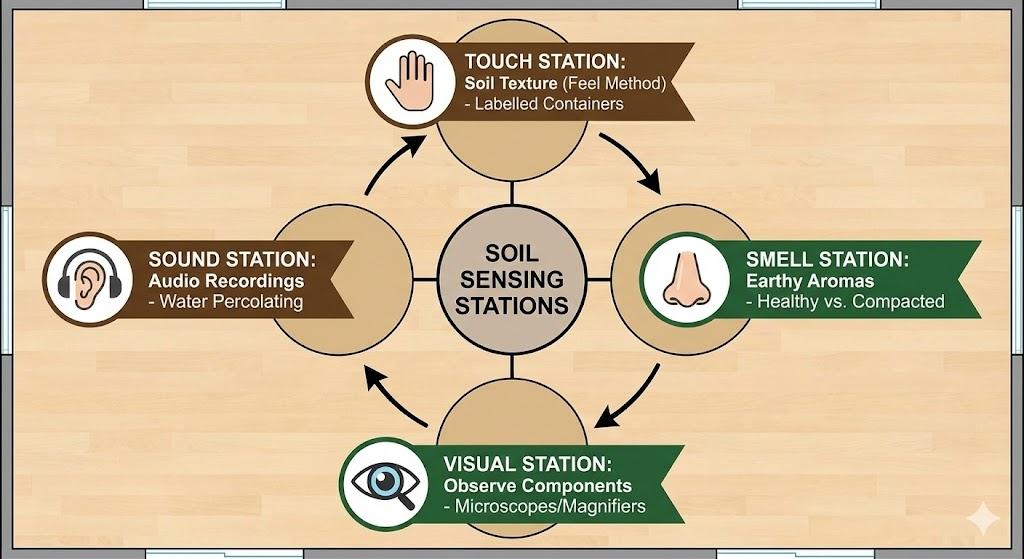
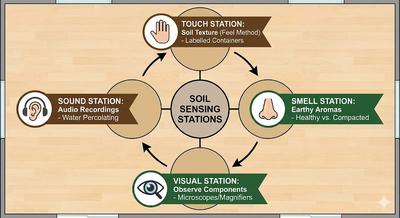
Set up "Soil sensing stations" around the classroom where students rotate through different sensory experiences:
Touch station: Soil texture assessment using the "feel method" with different soil types in labelled containers
Smell station: Identifying earthy aromas of healthy soils versus compacted ones
Visual station: Microscopes or magnifying glasses to observe soil components
Sound station: Audio recordings of water percolating through different soil types
2. Connect soil education to local cultural context
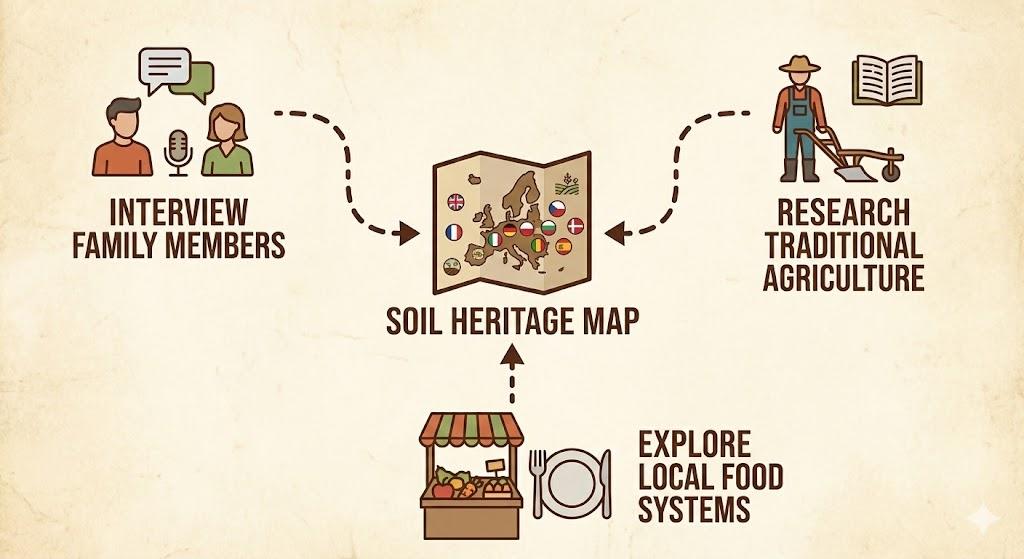
Relate soil science to local agricultural traditions, food systems, and cultural practices specific to your European region. Students can interview family members or research traditional agricultural practices from their cultural backgrounds, creating a classroom "Soil heritage map" showing different approaches to soil management across cultures. This helps make learning relevant for students from different cultural backgrounds.
3. Implement Universal Design for Learning (UDL)
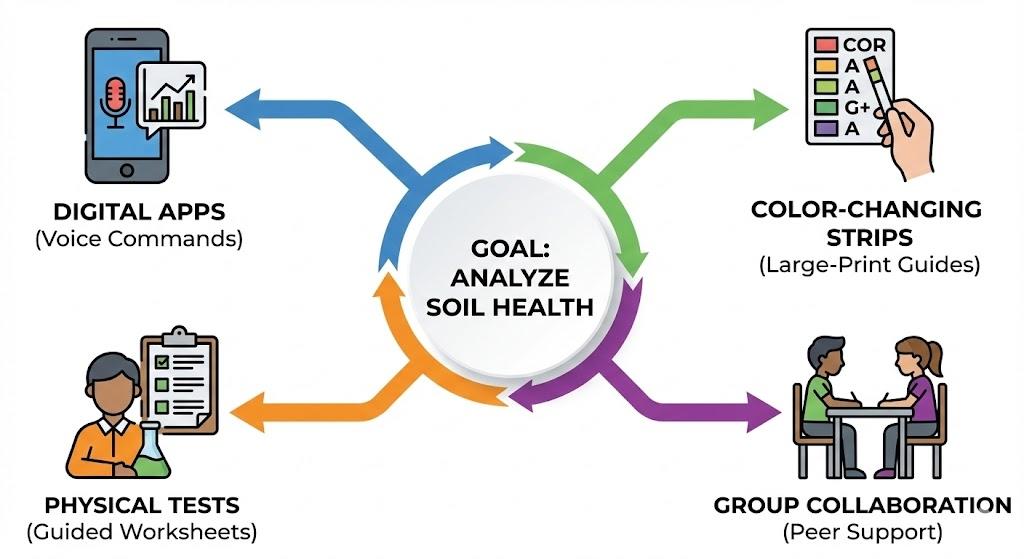
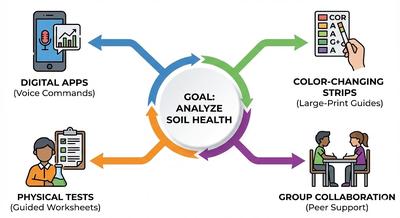
Provide flexible learning materials and multiple ways for students to engage with and demonstrate their understanding of soil concepts. Students can analyse soil health using multiple formats:
- Digital soil testing apps with voice commands
- Colour-changing test strips with large-print result guides
- Physical manipulation tests with guided worksheets
- Group collaboration options for those who benefit from peer support
4. Develop inclusive assessment methods
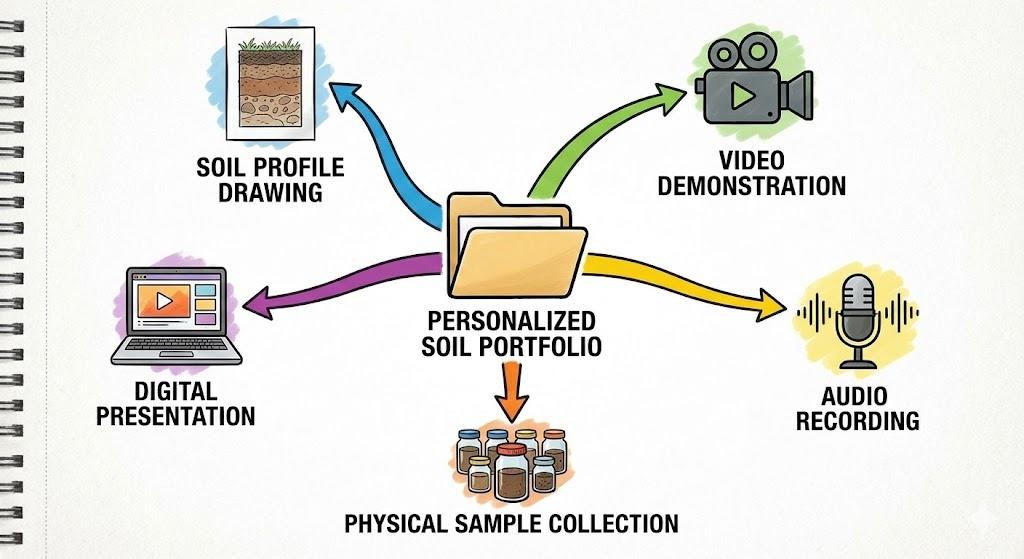
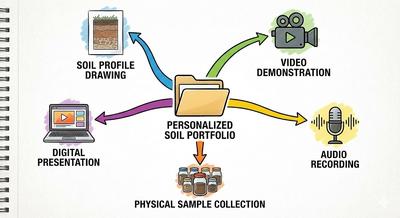
Offer diverse ways for students to demonstrate soil knowledge. Students can create personalized soil literacy portfolios choosing from options like:
- Soil profile drawings with annotations
- Video demonstrations of soil tests
- Audio recordings explaining soil functions
- Physical soil sample collections with descriptions
- Digital presentations on soil organisms
This respects different communication styles and abilities.


There is a mistake in a word in the 4th question of the quiz.
The Portuguese flag should be included in the second picture to not descriminate Portuguese teachers. Overal, it is very theoretical with few examples of how to do it in practice.