
Implementing buffet beds in schools
With your action plan designed (Section 4), it’s time to ground strategy in a high-impact, low-barrier project: buffet beds. These modular, no-till garden systems are ideal for schools—requiring minimal space, budget, or expertise while maximizing student engagement and cross-curricular links. Section 5 provides a useful roadmap. For school heads, buffet beds offer a visible quick win—transforming underused courtyards into learning hubs that attract community support and tangibly showcase your soil literacy commitment.
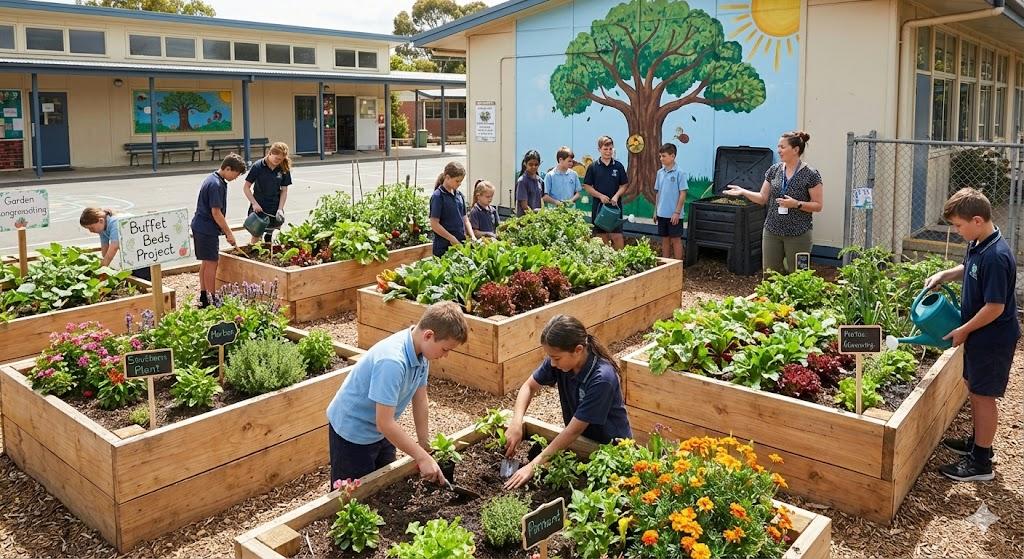
Buffet beds are innovative educational installations that allow students to engage with and learn about sustainable food production on a smaller scale.
Get inspired by some school gardens examples here and here.
By considering the following pros and cons, and implementing the solutions provided, your school can effectively incorporate buffet beds, maximizing educational and communal benefits while addressing potential obstacles.
Pros and cons of implementing buffet beds in schools
Pros
-
Hands-on learning: Provides students with practical experience in growing and maintaining plants, reinforcing classroom learning with real-world application.
-
Environmental awareness: Enhances students' understanding of food origins, biodiversity, and sustainable agricultural practices.
-
Interdisciplinary education: Offers opportunities to integrate various subjects such as science, health, geography, and even arts into the learning process.
-
Community engagement: Encourages collaboration with local experts, gardening clubs, and parents, strengthening community ties and support.
-
Nutrition and health education: Educates students about the benefits of fresh produce and fosters healthier eating habits.
-
Skill development: Promotes skills like teamwork, responsibility, and project management as students care for the plants.
Cons and solutions
-
Space limitations
Solution: Use vertical gardening techniques or container gardening if horizontal space is limited. Opt for smaller, densely-planted beds that maximize growing area without large space requirements.
-
Initial costs
Solution: Seek out grants or sponsorships from local businesses. Consider using recycled materials for bed construction and sourcing seeds from donations or community seed banks.
-
Maintenance challenges
Solution: Develop a structured maintenance schedule integrated into class routines or after-school clubs to ensure consistent care. Involve students, staff, and community volunteers.
-
Pest and disease management
Solution: Implement organic pest control methods and companion planting strategies. Educate students about integrated pest management practices.
-
Seasonal restrictions
Solution: Utilize greenhouses or indoor grow lights to extend growing seasons. Select crops suited to local climatic conditions and seasonal cycles.
-
Vandalism and security
Solution: Position beds in a monitored area and use school campaigns or signage to cultivate respect and ownership among students. Implement protective measures like fencing.
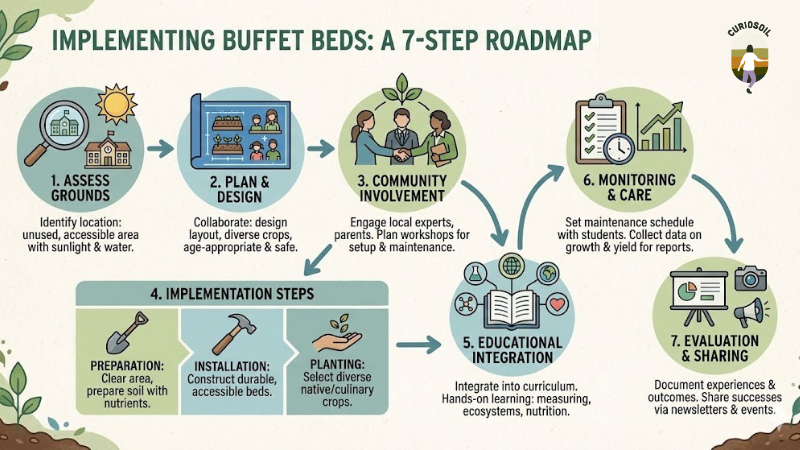
The following steps will help you implement buffet beds in your school.
1. Assess school grounds:
Identify a suitable location within school premises – preferably an unused or easily accessible area with sufficient sunlight and water access.
2. Plan and design
Collaborate with teachers and students to design the buffet bed layout. Include a variety of crops to ensure diverse learning opportunities. Ensure the design is age-appropriate for students to interact safely.
3. Community involvement
Engage local gardening clubs, agricultural experts, or parent volunteers for expertise and resources. Plan workshops with these stakeholders to educate staff and students about setup and maintenance.
4. Implementation Steps
-
Preparation: Clear the chosen area and prepare the soil, adding necessary nutrients.
-
Installation: Construct the beds with durable materials, ensuring they are accessible for all students.
-
Planting: Select a variety of crops – consider native plants or those that reflect the school’s culinary classes for broader application.
5. Educational integration
Integrate the buffet beds into the school curriculum across subjects – science, geography, and health education. Use them for hands-on learning activities, such as measuring growth, understanding ecosystems, and learning about nutrition.
6. Monitoring and care:
Set up a maintenance schedule involving students, facilitating continuous care and monitoring through class projects or extracurricular clubs. Implement data collection on growth and yield, integrating findings into annual reports or science fairs.
7. Evaluation and sharing
Encourage students to document their experiences and learning outcomes. Share successes and challenges through school newsletters or community events to inspire similar initiatives.
Reflect on the pros and cons, the steps of action, and post in the forum about your decision on whether to implement buffet beds.
If you decide to start, here are some tips:
Define the team. Who will be involved in planning and setting up?
Define the disciplines involved. What subjects or themes will be linked? Science? Geography? Arts?
How will you ensure regular maintenance?
How will you evaluate success? Student reflections? Data on plant performance? Teachers' reactions? Parents/community response?
How will you share your journey? School newsletter? Community event? MOOC forum? Video/photo documentation?
Soil literacy, when strategically embedded, becomes a signature of your school’s identity. From defining objectives (Section 1) to advocating for resources (Section 2), greening curricula (Section 3), and planning for scale (Section 4), you’ve built a framework for systemic change. Now, with buffet beds (Section 5), you have a launchpad—a low-cost, high-impact project that makes soil stewardship visible to students, staff, and the community.
Remember: Leadership isn’t about doing it all yourself. Empower your science teacher to lead bed construction. Let the math class calculate soil volume ratios. Task student clubs with seasonal planting. Your role is to align these efforts with accreditation goals, secure sustainable funding, and celebrate outcomes—whether it’s a harvest meal in the cafeteria or data from a student-led soil health study.
As budgets tighten and priorities shift, return to this truth: Soil is a powerful systems thinker’s tool. It connects science to food justice, art to ecology, and community partnerships to student agency. Start small (one grade level, one funded project) but think big. Measure success not just in test scores, but in student pride pointing to a regenerated patch of earth and saying, "We did this." That’s the leadership legacy you’re building.
 Please log in or register to post a comment