
Designing an action plan
A curriculum shift without implementation is merely paperwork. Section 4, Designing an Action Plan, bridges strategy to reality. You’ll build a phased rollout: Year 1 might pilot a school garden with science classes; Year 2 expands to art/community partnerships. Crucially, we’ll embed accountability, assigning team leads, securing sustainable funding (e.g., PTA partnerships), and aligning with accreditation goals to ensure longevity.
Think through the following steps and make short notes.
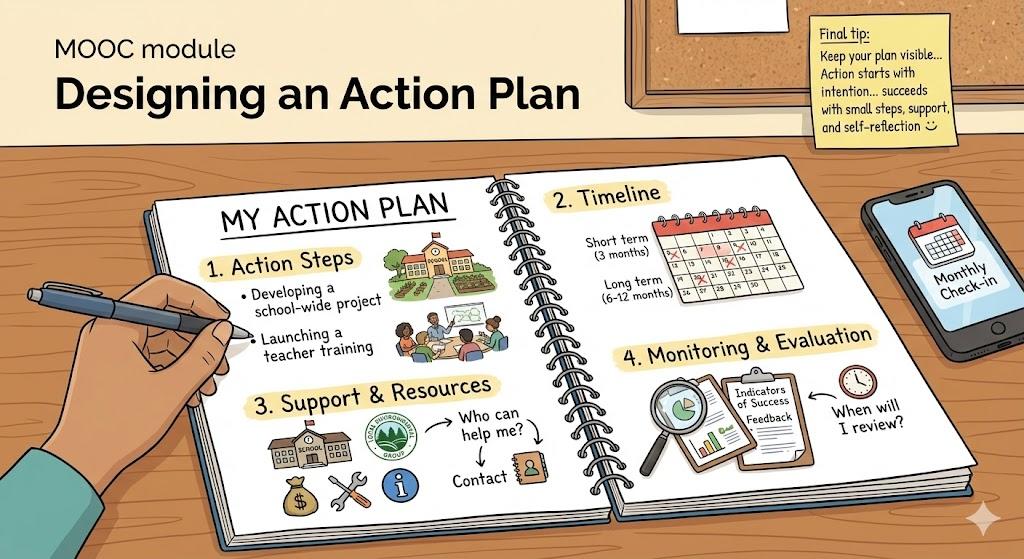
1. Action Steps
List 3-5 key actions you will take upon completing the MOOC (e.g., developing a school-wide project, launching a teacher training session).
My actions will be:
……………………………………………………………………………………………………………………………….
2. Timeline
Establish a realistic timeline for implementing your action steps. Include short-term and long-term goals.
Short term: (eg. next 3 months)
…………………………………………………………………………………………………………………….…………………
Long term: (eg. 6-12 months)
……………………………………………………………………………………………………………………………………....
Tip: Use calendar reminders to stay on track. Add a monthly check-in. - tutor
3. Support & Resources
Identify supports available to you (e.g., school board, local environmental groups) and additional resources needed. Plan how to access these supports and resources to achieve your objectives.
Ask yourself:
-
Who can help me?
-
What support do I need (money, time, tools, info)?
-
How will I reach out?
……………………………………………………………………………………………………………………………….
4. Monitoring & Evaluation
Determine how you will measure the success and impact of your actions (e.g., student engagement metrics, feedback from colleagues). Plan for periodic review and adjustment of your action plan to ensure effectiveness.
Indicators of success:
……………………………………………………………………………………………………………………………….
Who will give feedback?
……………………………………………………………………………………………………………………………….
When will I review and update this plan?
……………………………………………………………………………………………………………………………….
Final tip:
Keep your plan visible—in your planner, office, or teaching portfolio. Action starts with intention… but it succeeds with small steps, support, and self-reflection :)
 Please log in or register to post a comment