
Integrating Soil Literacy in Extracurricular Activities
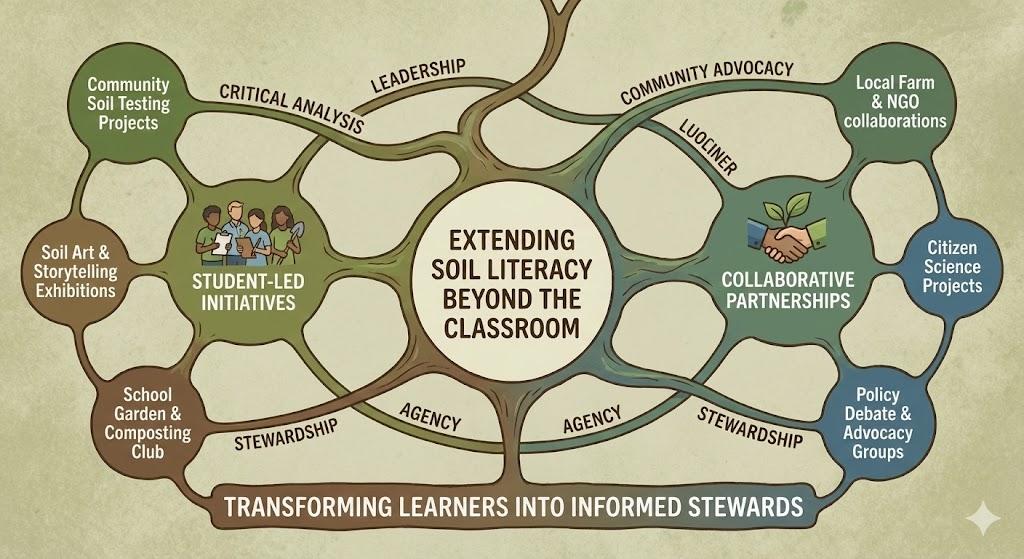
Soil literacy’s true power lies in transcending classroom walls. This lesson explores how to extend learning beyond formal curricula through student-led initiatives and collaborative partnerships. Discover how extracurricular activities can deepen engagement by empowering learners to apply soil science, ethics, and systems thinking in self-directed contexts.
These opportunities nurture skills like critical analysis, leadership, and community advocacy, while reinforcing interdisciplinary connections made in class. Whether through hands-on investigations, creative expression, or civic projects, students gain agency to explore soil’s role in their lives—transforming passive learners into informed stewards of their environment and communities.
These following examples of extracurricular activities creatively integrate soil literacy, engaging students and fostering a deeper connection to their environment and community. To enhance these activities, prioritize student leadership, encourage collaboration with local ‘experts’, and use multimedia tools to make soil literacy engaging and impactful.
Choose one you like from the list and reflect on how you would implement it, and or how you would adapt it for your own needs. Alternatively, you can come up with your own. Share on the course forum and engage with your peers.
Soil and sustainability club
Activity ideas: Establish a student-led club focused on soil health and sustainability practices. Launch a school challenge for groups of students to develop innovative solutions to local problems related to soil, such as erosion, pollution or waste of organic matter.
Organize regular meetings to discuss soil conservation, composting techniques, and sustainable agriculture.
Projects: Initiate a community garden where students manage soil health through different methods, such as crop rotation and organic fertilization.
Tips: Collaborate with local agriculture experts or community gardeners for workshops and guest lectures. Encourage students to document their gardening experiences through a blog or vlog for wider community engagement. / Encourage the use of design thinking methodologies. Create a ‘soil innovation fair’ for the groups to present their ideas to a jury made up of teachers, farmers and local technicians.
Eco-art workshop
Activity ideas: Conduct workshops where students create art using soil-derived pigments and/or soil (clay). Experiment with textures and colours by using different soil types to paint or craft pottery.
Tips: Partner with local artists specializing in natural materials. Display student artwork in school exhibitions to raise awareness about soil diversity and its aesthetic potential, but also its possible practical uses (e.g. pots and mugs).
Environmental film series
Activity ideas: Organize a series of film screenings focusing on documentaries about soil health, agriculture, and the environment, followed by student-led discussions or panels.
Tips: Facilitate critical thinking by having students compare the films to real-world soil challenges in their local communities. Encourage follow-up activities, such as creating short student documentaries or podcasts.
Soil science Olympiad
Activity Ideas: Host a science competition where students tackle soil-related problems, such as erosion solutions or soil biodiversity mapping.
Tips: Include various categories like experiments, research papers, and presentations. Offer workshops to prepare students, focusing on skills such as soil testing and data analysis.
Field trip series
Activity Ideas: Plan visits to farms, nature reserves, or research stations to observe soil management practices firsthand. Include activities like soil sampling and biodiversity assessment.
Tips: Engage with local agronomists or park rangers for guided tours. Encourage students to maintain field journals for reflections and data recording.
Soil storytelling festival
Activity Ideas: Organize a creative writing or storytelling event centred on soil themes, encouraging participants to explore the cultural and personal significance of soil.
Tips: Open participation to all students to foster interdisciplinary involvement. Use storytelling to highlight diverse perspectives on soil health conservation and its impact on communities.
Soil health awareness campaign
Activity Ideas: Launch a school-wide awareness campaign educating peers about soil health's importance through posters, social media, and workshops.
Tips: Encourage students to develop informational content and interactive activities demonstrating sustainable soil practices. Collaborate with environmental organizations to provide resources and support.
Soil and cooking workshops
Activity ideas: organise cooking workshops focusing on food produced in healthy soils. Students learn about the origin of ingredients, nutrition and sustainable cultivation techniques in a local to regional context.
Tips: invite local chefs and/or organic farmers to share producte, recipes and stories. Include moments of tasting and reflections on the relationship between soil, food and health.
Soil guardians programme
Activity ideas: create a ‘soil guardians’ programme where students take responsibility for looking after the school's green areas, monitoring soil health and educating fellow students about good practices.
Tips: create badges, field diaries and monthly awareness-raising events. Set measurable objectives, such as reducing organic waste or increasing vegetation cover (using endemic and appropriate plantings).
Soil podcast
Activity Ideas: Produce a series of episodes in audio format where students interview farmers, scientists or community members about stories and knowledge related to soil or explain various soil content/curiosities.
Tips: use simple recording equipment and publish the episodes on the school website or social networks. Encourage the involvement of different areas (sciences, languages, computer science).
This Soil Games page or this one may give you inspirations for creative ways of play and learn about soil.
Soil isn’t just a topic, it’s a lens. Through this module, you’ve explored how to turn soil literacy into a bridge between your classroom and the community. You’ve identified your goals, mapped allies, designed projects, and discovered how soil can weave through every subject and beyond. Remember: You don’t need a perfect plan or a green thumb to start. A single pot of soil, a five-minute chat about earthworms, or a student’s question about “why dirt matters” can ignite a journey.
As you move forward, return to this Module when in doubt or schedules overwhelm. Your work isn’t just about teaching soil; it’s about nurturing a generation that sees the ground beneath them as alive, connected, and worth caring for.

 Please log in or register to post a comment