
ENGAGING PARENTS
Engaging parents in a soil literacy project can greatly enhance school governance and foster a sense of community.
Consider the tips below, choose one or two and note your thoughts about how you would implement it.
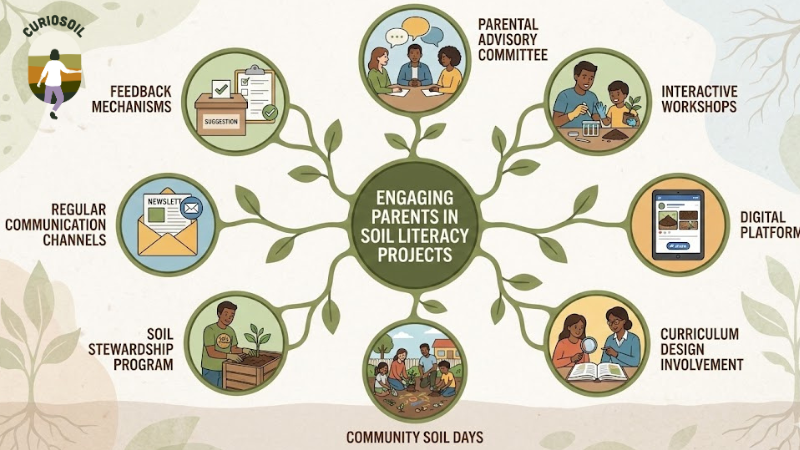
Establish a parental advisory committee:Form a committee consisting of enthusiastic parents to help oversee the soil literacy project. This group can provide valuable input, assist in decision-making, and act as a liaison between the school and the wider parent community. |
Organize interactive workshops:Host workshops where parents can learn alongside students about soil health, sustainable practices, and the importance of soil in daily life. Providing hands-on experiences can increase their involvement and commitment. |
Utilize digital platforms:Create an online portal or social media group dedicated to the project, where parents can find resources, share their own experiences, and contribute ideas for activities and curriculum enhancements. |
Involve parents in curriculum design:Invite parents with expertise in environmental science, agriculture, gardening or related fields to collaborate with teachers in designing and refining the curriculum. This inclusion can bring fresh perspectives and innovative ideas. |
Organize community soil days:Plan events where parents and their families can participate in activities such as soil testing, gardening workshops, environmental art projects related to soil conservation or creating compost. These events strengthen the school community and raise awareness about soil conservation. Link Suggestion – EU project for School Garden Material |
Develop a soil stewardship program:Encourage parents to volunteer as “Soil Stewards” who help maintain school gardens or conduct soil-related activities. Recognize and reward their contributions to build a stronger engagement culture. |
Set up regular communication channels:Ensure that parents are kept informed about the project’s progress, challenges, and successes through newsletters, emails, or regular meetings. Clear and consistent communication can foster transparency and trust. |
Incorporate feedback mechanisms:Establish ways for parents to provide feedback on the project's implementation and outcomes. This can be done through surveys or suggestion boxes, allowing them to voice their opinions and feel valued in the governance process. |
 Please log in or register to post a comment