
Communication and Disseminations of a Soil Literacy Project
Even thriving partnerships stall without strategic storytelling. Section 3, Communication & Dissemination, equips you to showcase impact in ways that work for you. Turn soil projects into accreditation evidence ("See our cross-curricular soil module in our renewal report"), parent pride points ("Your child presented soil data to the town council"), or funding proposals ("Our compost program reduced waste costs by 30%"). Templates will help you delegate this: task student clubs with social media, or a teacher with grant-writing.
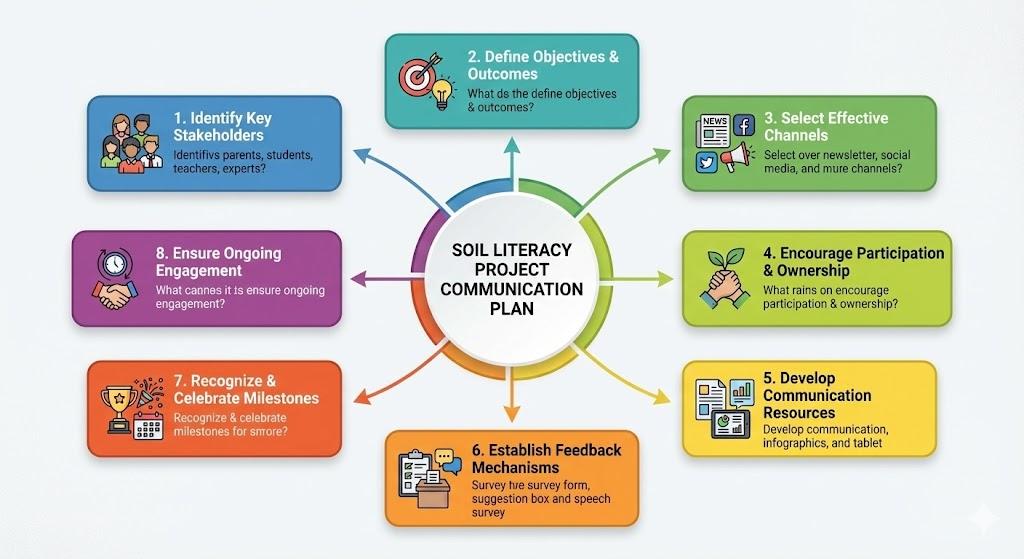
Answering the following questions will help you think through the steps you need to take when communicating and disseminating your soil literacy project.
Questions:
1. Who are the key stakeholders involved in the soil literacy project?
- Identify parents, students, teachers, local experts, and community organizations.
2. What are the main objectives and expected outcomes of the soil literacy project?
- Clearly define the goals and benefits for the school and community.
3. What communication channels are most effective for reaching each stakeholder group?
- Consider newsletters, social media, school meetings, and local events.
4. How can you encourage stakeholder participation and ownership in the project?
- Explore ways to involve stakeholders in planning and execution.
5. What resources and materials are needed to effectively communicate the project’s progress?
- Identify informational documents, visual aids, and digital content.
6. What feedback mechanisms should be in place to gather stakeholder input?
- Include surveys, suggestion boxes, and open forums for discussion.
7. How will you recognize and celebrate milestones and successes of the project?
- Plan events or communications to highlight achievements.
8. How can you ensure ongoing engagement and communication throughout the project’s lifecycle?
- Establish regular updates and checkpoints with stakeholders.
The following checklist will help you make sure that you have considered all major aspects of communication and dissemination.
Checklist:
- Identify and segment key stakeholders for targeted communication.
- Define clear objectives and outcomes for the project.
- Develop a communication plan with tailored strategies for each stakeholder group.
- Select and utilize effective communication channels (e.g., newsletters, social media).
- Create accessible and engaging resources/materials (e.g., brochures, infographics).
- Establish feedback loops for stakeholder input and adapt communication strategies accordingly.
- Schedule regular updates and keep stakeholders informed of project progress.
- Plan recognition and celebration of key milestones to maintain enthusiasm and support.
- Ensure long-term communication strategies are in place for continued engagement.
Check out this guide on effectiveness communications by the Ministry of Education of New Zealand.
This Schools Public Relations Best Practices can give you insights on your communications endeavours;
 Please log in or register to post a comment