
Mapping stakeholders for Soil Literacy Projects
With your goals clarified, it’s time to look outward. Soil literacy thrives on partnerships, especially in secondary schools, where projects often span departments or require community expertise. In Section 2, you’ll map stakeholders, from local environmental NGOs to science labs, to build a support network that enriches your teaching and expands student opportunities.
Following the 3 steps below will help you effectively map stakeholders and leverage their support to successfully implement your soil literacy project.
Step 1: Stakeholder mapping
Identify stakeholders: List all individuals and groups involved in decisions related to soil literacy at your school: teachers, parents, local authorities, environmental organizations, etc.
Categorize stakeholders: Use this stakeholder map to place them into quadrants based on influence and interest.
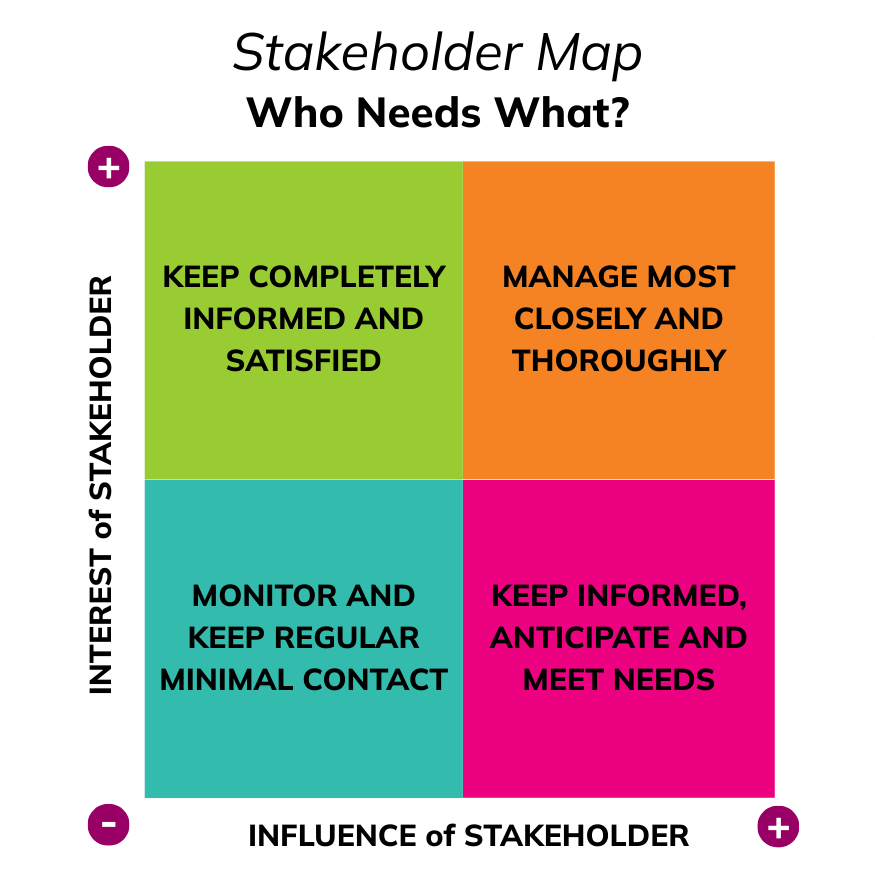
Then, ask the following questions:
Knowledge – What do they already know about soil literacy?
Beliefs – What are their educational values and perceptions of student-centred methods?
Interests – Any personal factors (e.g., parents of students, political interests) that might affect their support?
Impact – How will their support or opposition affect your project?
Have a look at these Miro templates to start mapping out the stakeholders.
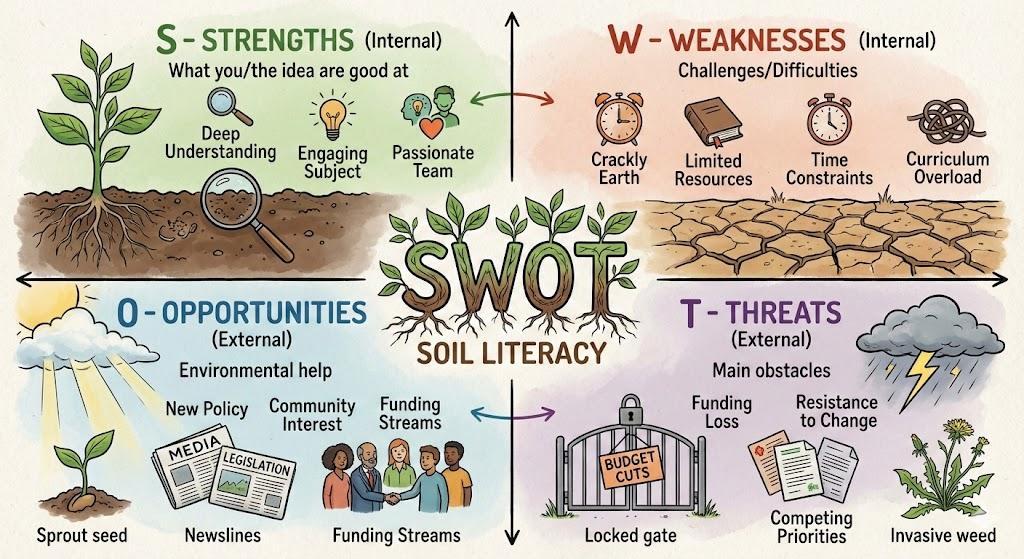
Step 2: SWOT analysis
Strengths: Internal advantages of soil literacy at your school (e.g., existing environmental curricula).
Weaknesses: Internal challenges, such as resource limitations or lack of expertise.
Opportunities: External factors like supportive local policies or community interest.
Threats: External obstacles such as budget constraints or competing priorities.
Perform this analysis specifically in relation to your school’s policy, institutional environment, and public opinion to understand potential barriers and enablers.
Learn more about SWOT analysis here.
Step 3: Identify advocacy tools
Existing tools: Leverage existing channels such as educational policy documents, research findings, and existing teaching methods.
Create new tools: Develop testimonials, infographics, and research summaries to support your case. Use digital platforms (e.g., newsletters, social media) while respecting privacy rights.

 Please log in or register to post a comment