
Personal Learning Objectives
Think through the following steps and make short notes on which goals you can identify with.
If you prefer, you can download the info below in spreadsheet format here and add your actions/reflections on your own document.
1. Knowledge goals
Example: Understand soil health indicators and how they apply to classroom projects.
|
2. Skill development
Example: Learn techniques for engaging young students in ecological assessments through soil investigations.
|
3. Application goals
Example: Design soil-based science projects or incorporate soil literacy themes into existing subjects like science and geography. |
4. Connection to current role
Example: Tailor soil literacy content to complement current lesson plans and teaching objectives, ensuring alignment with educational standards. |
5. Understanding personal responsibility
Example: realising that if you don’t teach soil literacy, your students might never learn why healthy soil matters to our food, water, and climate. |
6. Commitment to advocacy
Example: Act as a champion for soil literacy by organizing awareness days or campaigns focused on soil conservation. |
7. Engagement with stakeholders
Example: Foster partnerships with local gardens or agricultural experts for interactive learning experiences like workshops or gardening projects. |
8. Professional options
Example: Develop school policies that emphasize environmental education, and organize inter-class competitions on soil projects. |
9. Collaboration opportunities
Example: Coordinate guest lectures with local ecologists or arrange visits to nearby farms. |
10. Resource allocation
Example: Review the budget for field trips or materials needed for hands-on soil experiments.
|
11. Planning resource reallocation
Example: Allocate time during staff meetings for collaborative planning on soil-related projects.
|
|
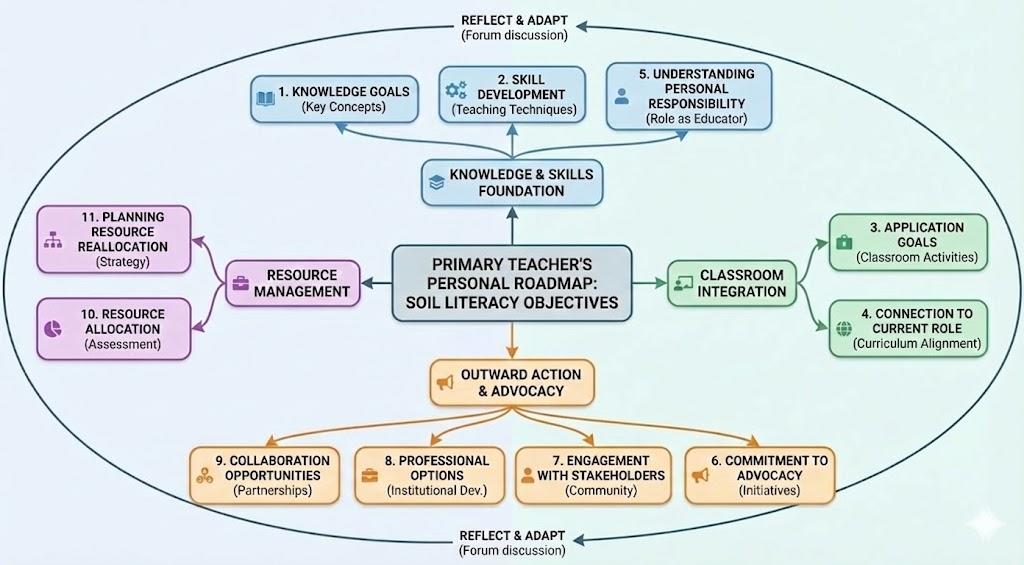
Forum reflection invitation:
What thoughts come to your mind after mapping your personal objectives? Were some of the prompts helpful on your reflection? Did it help you finding some blindspots? You can share your filled spreadsheet here or share your experience overall, with peers.
 Please log in or register to post a comment